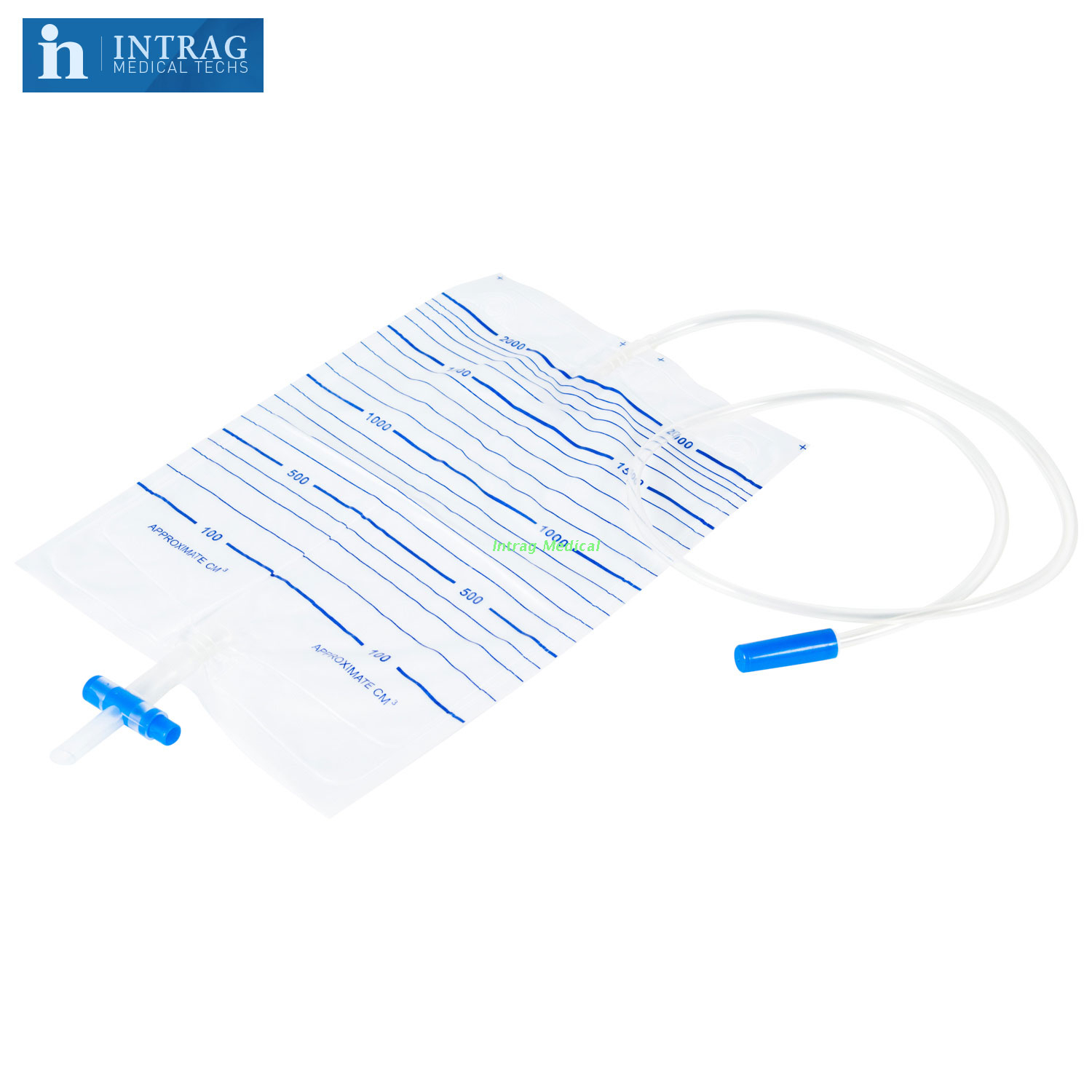
In the complex ecosystem of modern healthcare, fundamental medical supplies often dictate the baseline for patient safety and operational efficiency. The critical role that a high-quality fluid collection system plays in continuous patient care, post-surgery recovery, and overall hospital hygiene cannot be overstated. Is it just a plastic bag? Absolutely not. Despite being a routine consumable, the technical specifications of these devices directly impact clinical outcomes.
Procurement managers and hospital administrators frequently face overwhelming choices when sourcing medical supplies in large volumes. Choosing the wrong specifications can lead to severe consequences. Think fluid leakage, patient discomfort, cross-contamination, and elevated rates of Catheter-Associated Urinary Tract Infections (CAUTIs). Furthermore, purchasing substandard products results in wasted facility budgets and disrupted supply chains.
This comprehensive buyer’s guide is designed to solve these exact procurement challenges. By carefully comparing valve types, fluid capacities, and packaging options, B2B buyers can confidently select products tailored to their specific clinical needs. We will cover everything from detailed engineering specifications to the critical criteria required for evaluating bulk manufacturing standards. This ensures your next procurement cycle is both clinically sound and economically viable.
Key Takeaways
Valve Selection is Crucial: The mechanical choice between a push-pull mechanism and a T-valve dictates ease of use for nursing staff while establishing the baseline for infection control.
Capacity Must Match the Application: Standard bedside bags (typically 2000ml) are engineered for immobile patients. Wearable leg bags (500ml to 1000ml) offer mobility and discretion for ambulatory users.
Packaging Impacts Shelf Life: Bulk buyers must strategically choose between sterile packaging (blister packs/paper-poly pouches) and non-sterile packaging (PE bags) based on strict clinical requirements.
Supplier Reliability Equals ROI: Partnering with a certified manufacturer ensures strict regulatory compliance (CE, ISO 13485, FDA) and significantly better wholesale pricing structures.
Industry Trends: The Shift in Healthcare Procurement
The global healthcare sector is experiencing a sustained surge in demand for single-use urology consumables. This upward trajectory is primarily driven by macro-demographic factors, most notably a rapidly aging global population. As the elderly demographic expands, the prevalence of chronic conditions requiring long-term catheterization has proportionally increased.
Looking closely at recent market dynamics, there is a pronounced shift toward value-based care and strict infection control mandates. Health authorities globally have established rigorous guidelines to minimize CAUTIs, which remain a massive financial burden on hospital networks. Consequently, a clinically compliant disposable drainage bag is no longer viewed as just a collection vessel; it acts as a critical closed-system barrier, mitigating bacterial ingress.
Simultaneously, supply chain resilience has become a top priority. The lessons learned from recent global disruptions have pushed hospital networks away from fragile just-in-time inventory models. Procurement officers are now favoring strategic bulk purchasing to buffer against unexpected shortages. Buying in bulk not only optimizes freight shipping costs and reduces the carbon footprint but also allows facilities to lock in competitive unit prices against market inflation.
Understanding Valve Types: Push-Pull Valve vs. Cross Valve
The bottom drainage mechanism is the most critical decision-making factor when evaluating a fluid collection system. The valve dictates how easily staff can empty the contents, how secure the seal remains under pressure, and how well the system prevents contamination. Consider the operational reality on a high-volume ward: a nurse handling a poorly molded valve while wearing latex gloves faces a direct contamination risk.
Push-Pull Valve: Fast and Economical
The push pull valve urine bag utilizes a straightforward vertical friction-seal mechanism. To release the fluid, the operator simply pulls the valve downward. To seal it, they push it back upward into the closed position.
This design allows for rapid emptying of the reservoir. It is highly intuitive, making it suitable for general hospital wards or short-term catheterization following minor surgeries. From a manufacturing standpoint, this valve type benefits from highly streamlined injection molding processes. This makes it an incredibly cost-effective choice for bulk hospital procurement where budget optimization is a priority.
Cross Valve (T-Valve): Precision and Hygiene
In contrast to the vertical motion, the cross valve urine bag (frequently referred to as a T-valve) operates on a horizontal sliding track. The operator pushes the T-shaped bar to one side to open the flow and slides it back to the center to lock it securely.
Engineers and clinical staff widely regard the cross valve as the superior option for hygiene. Its design allows for precise control over the fluid flow rate, virtually eliminating the risk of splashing onto the floor or the nurse's shoes. Furthermore, it is engineered for easy one-handed operation. This ergonomic advantage makes it the preferred choice for Intensive Care Units (ICU), long-term care facilities, and premium medical product lines.
Core Comparison: Push-Pull vs. Cross Valve
Feature
Push-Pull Valve
Cross Valve (T-Valve)
Mechanism
Vertical pull/push friction seal
Horizontal sliding track
Flow Control
Rapid, full-flow release
Precise, adjustable flow rate
Operation
Two-handed or simple pull
Ergonomic one-handed operation
Best Application
General wards, short-term care, budget-conscious procurement
ICUs, long-term care, strict infection control environments
Choosing the Right Capacity and Specs
Selecting the correct fluid capacity is essential for balancing patient comfort with clinical practicality. The volume must align directly with the patient's mobility level and their expected hourly urine output.
Standard Bedside Bags (2000ml)
Standard bedside bags are the heavy-duty workhorses of inpatient fluid management. Typically sized at 2000ml, these large-capacity reservoirs collect output over extended periods without requiring constant monitoring. They are manufactured from medical-grade PVC (usually around 0.11mm to 0.12mm thickness for optimal puncture resistance). Equipped with reinforced punch holes and sturdy plastic bed hangers, they securely suspend from a hospital bed frame to maintain gravity-assisted flow.
Wearable Leg Bags (500ml - 1000ml)
For patients managing chronic incontinence while striving to maintain an active lifestyle, wearable leg bags are the required solution. Ranging from 500ml to 1000ml, these feature a contoured, low-profile design. When sourcing a reliable urine drainage bag for mobile patients, ensure they come equipped with dedicated eyelets and comfortable, non-slip elastic straps. They secure directly to the thigh or calf, providing ultimate discretion.
Packaging and Sterilization: Warehouse Storage Meets Clinical Safety
For procurement administrators, packaging is not merely an aesthetic consideration. It directly impacts warehouse CBM (Cubic Meter) optimization, product shelf life, and clinical safety.
The intended clinical application dictates the required sterility. When a collection system is used during the initial insertion of an indwelling Foley catheter, sterile packaging is clinically mandated. These products undergo strict Ethylene Oxide (EO) gas sterilization (compliant with ISO 11135), which eliminates all viable microorganisms.
When sterile products are required, the choice of individual wrapping affects the unit cost:
PE (Polyethylene) Bag: A highly cost-effective solution. It provides a reliable moisture barrier and is widely used for basic sterile needs or non-sterile bulk packing.
Paper-Poly Pouch (Blister Pack): A premium option featuring transparent plastic film and medical-grade dialysis paper. This design allows for maximum EO gas penetration and features an easy-peel opening, highly preferred in fast-paced surgical settings.
Essential Quality Features: An Engineer's Checklist
When evaluating product samples for a bulk wholesale order, do not just look at the price tag. Buyers should utilize a strict technical checklist to ensure the product meets the rigorous demands of professional healthcare facilities.
First, examine the tubing. The drainage tube must be an extruded, kink-resistant material. If a tube kinks while a patient is lying in bed, urine flow stops completely, causing painful bladder distension. Standard lengths should be exactly 90cm or 120cm, with an outer diameter (OD) of 6.5mm to ensure a secure, leak-free fit via a universal stepped connector.
In addition, the system must feature an internal Anti-Reflux Valve (NRV) at the top inlet. This specialized one-way chamber physically prevents the backflow of stagnant urine from the reservoir back into the patient's bladder. This is your primary defense against CAUTIs.
Finally, modern clinical standards prioritize the safety of healthcare workers. Premium bags now include needle-free sampling ports integrated into the tubing. This allows nurses to extract fresh urine samples using a standard Luer-slip syringe, completely eliminating the risk of accidental needle-stick injuries on the ward.
How to Choose a Reliable Supplier for Bulk Orders
Securing a competitive unit price is important, but partnering with a reliable urine bag supplier ensures long-term operational stability. B2B buyers must vet manufacturers carefully.
A trustworthy manufacturing partner must provide transparent proof of their quality management systems, specifically ISO 13485 certification. Depending on your region, the products must carry valid CE marks or FDA 510(k) clearances. Furthermore, superior manufacturers offer robust OEM (Original Equipment Manufacturer) services. This means the supplier can customize specific physical features—such as altering the tube length, swapping valve types, or printing localized language instructions directly on the paper-poly pouches.
Conclusion and Next Steps
Selecting the right combination of drainage mechanisms, fluid capacities, and packaging materials is fundamental to the success of any medical procurement strategy. Whether you require an economical push-pull mechanism for general wards or a precision T-valve for intensive care, the specifications directly impact patient comfort and facility hygiene.
Bulk purchasing requires a careful evaluation of these technical features alongside strict logistical considerations. By balancing clinical safety with unit cost, procurement managers can optimize their budgets without compromising on the quality of patient care.
Ready to upgrade your inventory? Always partner with a certified medical manufacturer that prioritizes regulatory compliance. We encourage healthcare administrators and B2B distributors to evaluate build quality before finalizing wholesale agreements. Explore the extensive catalog at Medintrag to find products that match these exact clinical specifications, request physical samples, and secure competitive wholesale pricing for your next procurement cycle.
Frequently Asked Questions (FAQ)
What is the shelf life of a packaged disposable urine bag?
The standard shelf life is typically 3 to 5 years from the date of manufacturing, provided the product is stored properly in a cool, dry, and well-ventilated warehouse away from direct sunlight. The exact duration depends heavily on the sterilization method used (such as EO gas) and the integrity of the packaging material.
What is the difference between a push-pull valve and a cross valve?
A push-pull mechanism relies on a simple vertical motion—pulling down to open and pushing up to close—making it fast and highly economical. In contrast, a cross valve (T-valve) slides horizontally. The T-valve is preferred for its ergonomic, one-handed operation and superior flow control, which drastically reduces the risk of splashing.
How often should a disposable drainage bag be changed?
Based on standard clinical guidelines, a closed-system drainage bag should usually be changed every 3 to 7 days. However, it must be replaced immediately if the bag becomes damaged, if the closed system is accidentally disconnected, or if there is a visible buildup of sediment.
What is the standard tube length and diameter for a urine drainage bag?
Industry-standard tubing lengths are typically 90cm (approx. 35 inches) or 120cm (approx. 47 inches) to provide adequate slack for patient movement. The standard outer diameter (OD) is 6.5mm, designed to accommodate a universal stepped connector that fits securely into standard Foley catheters.
How do drainage bags help prevent Catheter-Associated Urinary Tract Infections (CAUTIs)?
High-quality drainage bags prevent CAUTIs by maintaining a strict closed system. They utilize an internal Anti-Reflux Valve (NRV) that stops stagnant urine from flowing back into the bladder. Additionally, needle-free sampling ports allow nurses to draw urine for testing without breaking the sterile seal of the system.
Are these medical collection bags latex-free?
Yes, the vast majority of modern, high-quality collection systems are manufactured from medical-grade PVC and are 100% latex-free. This is a critical safety standard designed to prevent severe allergic reactions or anaphylaxis in patients with known latex sensitivities.
Providing "High Quality Products, Excellent Service, Competitive Prices and Prompt Delivery", we are now looking forward to have greater and further cooperation with customers all over the world, based on mutual benefits.