Picture a highly anxious patient gripping the dental chair armrests. They dread the exact moment the anesthetic syringe appears. Delivering painless, effective local anesthesia is undeniably the cornerstone of a positive patient experience. Behind the scenes, however, clinic managers and dentists frequently debate a critical procurement detail. Which instrument gauge truly optimizes this process?
When ordering clinical supplies, the choice often comes down to a fundamental trade-off. Do you prioritize the structural rigidity of a thicker gauge, or do you lean toward the ultra-thin profile of a finer one? Picking the wrong size goes far beyond mere patient comfort. It directly impacts clinical safety, aspiration reliability, and the overall efficiency of your daily workflow. Let us break down the technical nuances and debunk pervasive pain myths. This guide will provide a clear, actionable framework to help you optimize your clinic's inventory immediately.
Key Takeaways
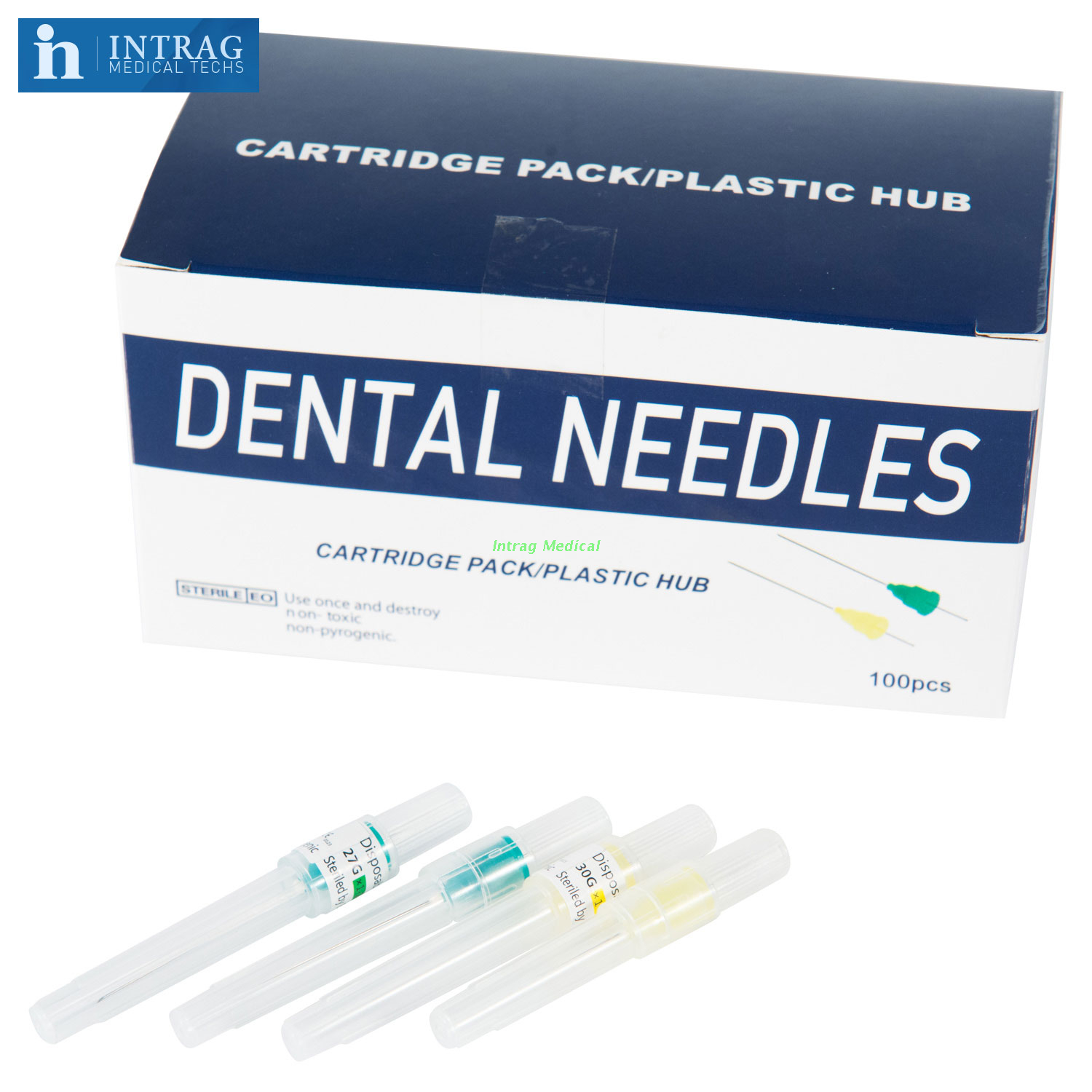
Gauge Basics: In medical terminology, a higher gauge number indicates a thinner shaft. Therefore, a 27G model (universally color-coded with a yellow hub) possesses a thicker profile and wider internal lumen than a 30G variant (blue hub).
Clinical Application: The 27G remains the gold standard for deep nerve blocks, such as the Inferior Alveolar Nerve Block (IANB). This is due to its low deflection rate and highly reliable positive aspiration capabilities. Conversely, 30G instruments are optimal for local maxillary infiltrations and pediatric dentistry.
The Pain Myth: Extensive clinical evidence proves patients cannot perceive a statistically significant difference in pain between different gauges during mucosal puncture. Injection discomfort is primarily driven by fluid delivery speed and solution pH.
Stocking Strategy: General dental clinics must avoid restricting their inventory to a single size. A strategic ratio—typically 60% 27G and 40% 30G—ensures practitioners are fully equipped for diverse clinical scenarios.
Supplier Importance: The ultimate factor in achieving a painless injection is manufacturing precision. Sourcing highly polished, multi-beveled devices from a certified manufacturer is far more critical than simply defaulting to the smallest available size.
Understanding Dental Needle Gauges: The Structural Basics
To make informed procurement decisions, clinic managers must first grasp the structural fundamentals of these essential consumables. What does "Gauge" (G) actually mean? It refers to the measurement of both the outer diameter of the shaft and the inner diameter of the lumen. The lumen is the hollow tube through which the anesthetic fluid flows. Based on the Stubs Iron Wire Gauge system, the number is inversely proportional to the diameter.
To streamline fast-paced clinical workflows, the industry utilizes a universal color-coding system on the plastic hubs. This visual cue allows dental assistants and practitioners to instantly identify the correct instrument on the surgical tray, preventing dangerous mix-ups. A yellow hub denotes 27G. A blue hub signifies 30G.
Understanding the anatomy of a dental injection needle is equally important. A standard unit consists of three primary components: the bevel, the stainless steel shaft, and the hub that threads onto the syringe. The bevel is the slanted, sharp tip designed to slice through mucosal tissue. The specific engineering of these three elements dictates the device's performance, safety profile, and the patient's sensory experience during administration.
The 27G Dental Needle: Pros, Cons, and Clinical Uses
In the realm of modern dentistry, the 27G dental needle is widely regarded as the reliable workhorse of the clinic. Its structural integrity and internal fluid dynamics make it an indispensable tool for the vast majority of restorative and surgical interventions.
This specific gauge is meticulously engineered for procedures demanding deep tissue penetration alongside a high degree of anatomical accuracy. Imagine navigating the dense pterygomandibular space during an IANB. The rigid shaft ensures your tip reaches the precise anatomical landmark without bowing off course. Furthermore, it is the preferred choice for the Gow-Gates mandibular block, the Akinosi-Vazirani block, and any regional block where the instrument must traverse multiple layers of muscle.
The advantages of this gauge are deeply rooted in clinical safety. The most critical protocol during a deep block is the aspiration test. The wider internal lumen of the 27G allows blood to flow back into the anesthetic cartridge swiftly and visibly. This rapid visual feedback significantly reduces the risk of accidental intravascular injection, which could otherwise trigger severe systemic toxicity. In addition, the robust thickness maintains a straight trajectory, guaranteeing the anesthetic solution is deposited exactly where intended. Sudden patient movement can put immense lateral stress on the shaft, but the thicker profile provides a crucial safety margin against breakage.
The primary disadvantage is largely psychological rather than clinical. Because it is visibly thicker than its finer counterparts, it can appear more intimidating. Highly anxious patients or those suffering from trypanophobia may experience heightened stress if they catch a glimpse of the syringe prior to administration.
The 30G Dental Needle: Pros, Cons, and Clinical Uses
While it lacks the structural rigidity necessary for deep mandibular blocks, the ultra-fine 30G dental needle plays a highly specialized and vital role in a well-stocked practice. Its delicate profile makes it the perfect instrument for specific, shallow anatomical applications.
This slender instrument is the tool of choice for maxillary infiltrations. Here, the anesthetic only needs to pierce a thin mucosal layer to diffuse through porous bone. It is also highly recommended for palatal injections. The tissue on the hard palate is exceptionally dense and firmly bound to the underlying bone, making injections notoriously uncomfortable. A thinner shaft helps mitigate this localized discomfort. Pediatric dentists also heavily rely on 30G short and ultra-short variants for primary teeth procedures.
The visible slenderness offers a massive psychological benefit. For pediatric patients or adults who insist on watching the procedure, the ultra-thin shaft can drastically reduce pre-injection panic. Mechanically, the smaller outer diameter displaces slightly less cellular volume upon entry. In theory, this causes less mechanical trauma to the immediate puncture site, potentially resulting in milder post-operative soreness.
However, flexibility is its greatest clinical liability. When inserted deep into muscle tissue, the shaft is highly susceptible to bending off its intended course. This deflection frequently leads to missed nerve blocks and the frustrating need for repeated injections. More alarmingly, the narrow internal lumen creates immense resistance to fluid flow. During an aspiration test, drawing blood back into the cartridge requires significantly more negative pressure. Consequently, this can lead to false-negative aspirations, severely elevating the danger of injecting anesthetic directly into the bloodstream.
The Great Pain Debate: Does a 30G Needle Actually Hurt Less?
A pervasive myth among both patients and newer dental practitioners is the assumption that a thinner shaft automatically guarantees a painless experience. This misconception often drives procurement managers to overstock finer gauges under the guise of improving patient comfort. However, empirical clinical evidence tells a decidedly different story.
Numerous double-blind clinical trials within the dental field have rigorously evaluated patient pain perception. The consensus is overwhelmingly clear. When injecting into the oral mucosa, patients cannot reliably distinguish the difference between a 27G and a 30G instrument. If topical anesthetic is applied correctly and given ample time to act, the initial mucosal puncture is virtually imperceptible regardless of the chosen size.
If the diameter isn't the primary culprit, what actually causes that familiar sting? Clinical research points to three main factors. First is volume pressure. Delivering the solution too aggressively causes microscopic tissue tearing and a sharp burning sensation. The ideal delivery rate is a slow, steady 1 mL per minute. Second is solution pH. Local anesthetics containing vasoconstrictors are formulated with acidic preservatives. This acidity causes an immediate stinging sensation upon entering the neutral pH environment of the human body. Finally, bevel sharpness plays a massive role. A dull tip will tear tissue rather than slice cleanly through it. A premium, ultra-sharp 27G will cause far less trauma than a poorly manufactured, blunt 30G.
Industry Trends in Dental Anesthesia Delivery
Looking at the broader landscape of dental procurement, the conversation surrounding anesthesia delivery is rapidly evolving. Today's clinics are shifting their focus from simple gauge selection toward comprehensive, patient-centric pain management systems. Specifically, there is a rising adoption of Computer-Controlled Local Anesthetic Delivery (CCLAD) devices. These automated systems precisely regulate the flow rate of the anesthetic fluid, effectively neutralizing the pain caused by volume pressure. Interestingly, many of these advanced systems are optimized for specific needle gauges to maintain precise fluid dynamics, often favoring the reliable flow of a 27G.
In addition, there is a growing industry emphasis on clinician ergonomics and occupational safety. With needlestick injuries remaining a prominent hazard, procurement managers are increasingly prioritizing high-tensile stainless steel alloys that resist bending and breakage. The market is leaning heavily toward manufacturers who can provide flawlessly polished, multi-beveled tips. These precision tips drastically reduce insertion force. This minimizes hand fatigue for the practitioner while simultaneously elevating the patient experience.
27G vs 30G: Which Should Your Dental Clinic Stock?
Given the distinct clinical advantages of both options, the decision should never be framed as a strict "either/or" scenario. Effective inventory management requires aligning your stock with the specific demographic and procedural focus of your practice.
Clinical Parameter
27G (Yellow Hub)
30G (Blue Hub)
Primary Indication
Inferior Alveolar Nerve Blocks, deep tissue
Maxillary infiltrations, palatal, pediatrics
Aspiration Reliability
Highly reliable; rapid blood detection
Difficult; high resistance during pullback
Deflection Risk
Low; maintains straight trajectory
High; prone to bending in deep insertions
Tissue Penetration
Requires slightly more initial force
Glides easily through superficial layers
General practitioners perform a diverse array of procedures daily. Standardizing on a single size introduces unnecessary clinical limitations. A highly efficient inventory model involves maintaining 60% to 70% of 27G needles (primarily long and short lengths) alongside 30% to 40% of 30G needles (primarily short and ultra-short). This balanced ratio ensures absolute readiness for any anatomical challenge.
In contrast, specialty clinics must tailor their inventory to match their specific operational focus. Endodontists and oral surgeons routinely manage complex extractions, necessitating deep, highly reliable anesthesia. Consequently, their inventory should lean heavily toward 27G to guarantee zero deflection and positive aspiration. Pediatric dentists deal with smaller anatomical structures and heightened anxiety. These clinics often reverse the standard ratio, stocking a higher volume of 30G short instruments for shallow infiltrations on deciduous teeth.
Crucial Features to Look for in a Disposable Dental Needle
When evaluating inventory options, procurement officers must look beyond the color-coded hub. The overall engineering quality of a disposable dental needle directly dictates the smoothness of the procedure. Here are the critical technical features to demand:
Advanced Bevel Design: The tip should be precision-engineered, not just cut. Look for triple-beveled (lancet) points. This multi-angle grinding creates a superior cutting edge that slices cleanly through the cellular matrix, drastically reducing mechanical trauma. Some premium hubs also feature a triangle indicator to help practitioners orient the bevel correctly during injection.
Premium Materials & Coating: Ensure the cannula is crafted from high-grade SUS304 austenitic stainless steel for optimal tensile strength. Furthermore, premium options are treated with a highly purified medical-grade silicone coating. This acts as a powerful lubricant, allowing the stainless steel to glide frictionlessly and preventing the uncomfortable "drag" sensation.
Hub Threading Compatibility: Dental syringes globally utilize different threading standards. Ensure the pre-threaded plastic hubs of your chosen consumables are universally compatible with both metric and imperial syringes to prevent cross-threading and dangerous fluid leakage.
Sterilization & Packaging: Patient safety remains non-negotiable. Every unit must be individually blister-packed and sterilized using Ethylene Oxide (EO) gas. Look for clear tamper-evident seals and products that guarantee a 5-year shelf life.
How to Choose a Reliable Dental Needle Supplier
Sourcing medical consumables is a high-stakes responsibility for clinic owners. Partnering with the right dental needle supplier ensures not only competitive pricing but also unwavering clinical safety and supply chain stability. To assist in making informed B2B purchasing decisions, evaluate potential partners against strict criteria.
First and foremost, verify regulatory compliance. Do not compromise on international certifications. Ensure the manufacturer holds active CE marks (such as CE 0197), FDA clearance, and ISO 13485 certification. This guarantees a stringent quality management system specific to medical devices.
Finally, assess their logistics and product range. A reputable vendor must demonstrate supply chain resilience to prevent backorders that could stall your daily operations. They should serve as a comprehensive one-stop-shop, offering a complete portfolio of gauges (25G, 27G, 30G) and lengths—from ultra-short (12mm) and short (21mm/25mm) to long (30mm/31mm/35mm)—to satisfy every clinical requirement under a single, streamlined vendor account.
Conclusion
The debate between utilizing a 27G or a 30G instrument is not about finding a single winner. Both gauges serve distinct, irreplaceable purposes within a modern dental clinic. The 27G provides unparalleled safety and precision for deep nerve blocks, while the 30G excels during shallow tissue infiltrations and pediatric care.
Rather than fixating solely on finding the thinnest possible shaft, clinics should focus their efforts on sourcing ultra-sharp, silicone-coated products from reputable manufacturers. By maintaining a strategic inventory ratio of both sizes, you empower your practitioners to deliver profound, safe, and comfortable anesthesia tailored to each patient's unique anatomical needs. Review your current stock today, and source premium, CE/ISO-certified products from trusted manufacturers like Medintra to ensure optimal clinical readiness for every appointment.
FAQ (Frequently Asked Questions)
Can a 30G dental needle be used for an inferior alveolar nerve block (IANB)?
Clinical guidelines highly discourage this practice. A 30G shaft lacks the structural rigidity required to navigate the dense muscle of the mandible without bending. This deflection often leads to missed targets and failed anesthesia. More importantly, the narrow inner lumen makes positive aspiration extremely difficult, significantly increasing the risk of injecting anesthetic directly into a blood vessel. For IANB procedures, a 27G or 25G long needle is the established standard.
Are dental injection needles universally compatible with all syringes?
While most modern single-use hubs are designed to fit standard reusable metal dental syringes, absolute universal compatibility cannot be blindly assumed. Syringes are manufactured with either metric or imperial threading. Mismatched threads can lead to cross-threading and subsequent anesthetic leakage. It is always best practice to consult with your procurement partner to verify thread specifications before placing a bulk order.
How often do dental needles break during injections?
Thanks to the widespread use of high-tensile SUS304 stainless steel, breakage is an incredibly rare complication in modern dentistry. When it does occur, it is typically due to improper technique—such as bending the shaft at the hub prior to insertion, burying the instrument completely to the hub, or sudden, violent patient movement. While thinner profiles inherently possess less tensile strength, adhering to proper injection protocols virtually eliminates this risk across all sizes.
What is the difference between short and long dental needles?
Length is just as critical as the diameter. Long needles (typically measuring between 30mm and 35mm) are specifically designed for deep tissue penetrations where the anesthetic must be deposited far below the mucosal surface. Short needles (21mm to 25mm) and ultra-short variants (10mm to 12mm) are utilized for shallow infiltrations, palatal injections, and pediatric dentistry. Both 27G and 30G options are manufactured in various lengths to accommodate these diverse requirements.
What length needle is best for dental local anesthesia?
The ideal needle length depends entirely on the specific injection technique. Long needles (typically 30mm to 35mm) are the standard for deep regional blocks, such as the IANB, where the target nerve is located deep within the tissue. Short needles (21mm to 25mm) are preferred for maxillary infiltrations. Ultra-short options (10mm to 12mm) are generally reserved for pediatric dentistry and palatal mucosal injections where minimal penetration depth is required.
Can a 30G needle penetrate dental bone?
No dental needle, regardless of its gauge, is designed to penetrate solid cortical bone. Local anesthesia works by depositing the anesthetic solution into the soft tissue adjacent to the nerve, or by allowing the fluid to diffuse through porous cancellous bone (as seen in maxillary infiltrations). A 30G needle should only be used to pierce soft mucosal tissue; forcing it against hard bone will cause severe bending, blunting of the bevel, or potential breakage.
Providing "High Quality Products, Excellent Service, Competitive Prices and Prompt Delivery", we are now looking forward to have greater and further cooperation with customers all over the world, based on mutual benefits.