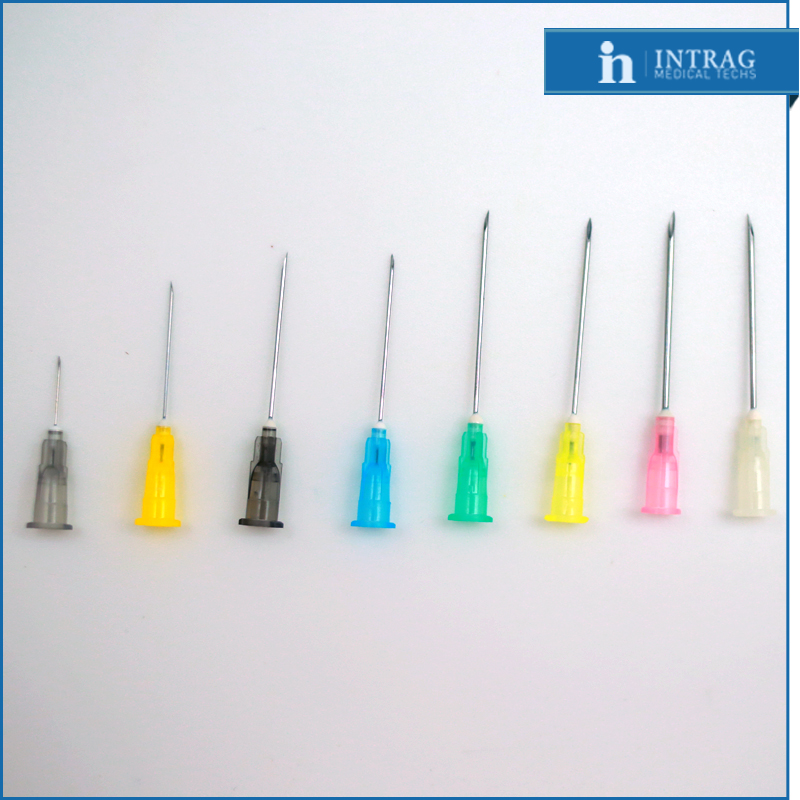
In clinical settings, medication delivery efficacy and patient care quality depend on precise medical consumable selection. Mismatching needle gauge to the clinical application causes increased injection pain, compromised flow rates, tissue trauma, or catastrophic failure of the disposable syringe during administration. Medication viscosity, injection route, and patient demographics all dictate the required specifications. For clinical directors and procurement teams, standardizing inventory requires a rigorous understanding of how needle gauge dictates performance on the floor. You cannot simply guess which size works best. This guide breaks down the technical evaluation criteria for selecting the correct hypodermic needle specifications. We will examine how to balance patient comfort, clinical efficacy, and supply chain efficiency without overcomplicating your stockroom.
Inverse Measurement System: Hypodermic needle gauge operates on an inverse scale; higher gauge numbers indicate thinner needles, directly influencing flow rate and insertion resistance.
Gauge and Length Proportionality: To maintain structural integrity and prevent bending under skin penetration, higher gauge (thinner) needles are manufactured in shorter lengths.
Viscosity Dictates Diameter: High-viscosity medications and rapid fluid delivery protocols require lower-gauge (thicker) needles to prevent pressure-induced syringe failure.
Clinical Route Determines Pairing: Gauge must be evaluated in tandem with needle length to ensure accurate delivery across intradermal, subcutaneous, and intramuscular routes.
Risk Mitigation: Standardizing injection products requires balancing SKU consolidation with the clinical necessity of having specific gauges available to prevent adverse events like hemolysis during blood draws.
The Mechanics of Hypodermic Needle Gauge: Establishing Baseline Criteria
Understanding the Birmingham Wire Gauge (BWG) System
The Birmingham Wire Gauge system establishes an inverse relationship between the gauge number and the outer diameter of the needle. A lower gauge number signifies a thicker needle with a larger outer diameter. A higher gauge number denotes a thinner needle. This fundamental principle dictates fluid dynamics and tissue interaction during any injection procedure. Medical staff must memorize this inverse scale to avoid critical errors during high-stress situations.
Gauge (G)
Outer Diameter (mm)
Typical Color Code (ISO 6009)
Common Clinical Application
18G
1.20
Pink
Blood donation, rapid fluid resuscitation
21G
0.80
Green
Standard venipuncture, thick intramuscular meds
23G
0.60
Blue
Routine vaccines, subcutaneous injections
25G
0.50
Orange
Pediatric vaccines, diagnostic sampling
27G
0.40
Grey
Insulin administration, intradermal tests
Anatomy of the Cannula
Procurement teams evaluate several critical dimensions when selecting needles. The outer diameter determines the insertion profile and patient comfort level. The inner diameter governs the flow capacity and administration speed. Wall thickness affects the internal volume without altering the external footprint. Manufacturers categorize walls as regular, thin, or ultra-thin. Ultra-thin walls maximize flow rates for thicker fluids while maintaining a smaller gauge profile. This allows you to push viscous medications through a thinner needle, reducing patient discomfort.
The Inverse Proportionality of Gauge and Length
Physical constraints in manufacturing require higher gauge needles to feature shorter lengths. Thinner cannulas lack the structural rigidity to withstand deep tissue penetration. If you push a long, thin needle into dense muscle, it will bend, buckle, or break. Manufacturers limit the length of 30G or 32G needles to ensure safe insertion. You will only see these ultra-thin needles used for superficial tissue layers. You must match the length to the target depth to avoid structural failure.
Penetration Dynamics and Bevel Geometry
Gauge size interacts closely with bevel design to dictate insertion smoothness. Regular, short, or intradermal bevels slice through tissue differently. A well-matched gauge and bevel geometry minimize tissue displacement. This reduces initial insertion trauma and leads to better patient compliance. A sharp, appropriately beveled needle requires less force. Less force means less tissue tearing and less bruising for the patient.
The Physics of Flow
Poiseuille's Law frames the physical reality of fluid administration. Slight changes in the inner diameter exponentially impact the flow rate. A larger inner diameter drastically reduces the required plunger pressure. It also shortens administration time. This proves critical when delivering large volumes or viscous suspensions. If you use a needle that is too thin, you will fight the fluid pressure. This causes hand fatigue and increases the risk of component separation.
Core Evaluation Dimensions: Matching Gauge to Clinical Application
Medication Viscosity and Delivery Speed
Achieving optimal flow rates without excessive manual pressure defines success in fluid delivery. Low-gauge needles handle oil-based suspensions and biologics efficiently. High-gauge needles struggle with viscous fluids. They extend injection times and increase the risk of clogging. Thinner needles reduce patient anxiety but demand careful matching with low-viscosity aqueous solutions. You must read the medication insert to determine the recommended gauge. Ignoring viscosity guidelines leads to equipment failure and delayed treatment.
Assess the viscosity of the medication before selecting the needle.
Choose 18G to 20G needles for thick, oil-based suspensions.
Select 22G to 25G needles for standard aqueous solutions.
Reserve 27G to 32G needles for highly fluid, low-volume injections like insulin.
Patient Comfort and Tissue Trauma
Minimizing insertion pain and localized tissue damage remains a top priority. This matters heavily for diabetic or pediatric patients requiring frequent injections. Clinical data links higher gauge needles to statistically significant reductions in skin penetration force. A lower frequency of patient pain during skin insertion improves therapeutic adherence. Clinicians must balance this low-friction insertion with the structural integrity of the needle. Ultra-thin options carry a higher risk of bending in dense tissues. You must evaluate the patient's muscle mass and skin condition before proceeding.
Injection Depth and Anatomical Targeting
Reliable delivery of therapeutics to the targeted tissue layer requires precise gauge and length pairing. Structural safety limits high-gauge needles to shorter lengths. This makes them unsuitable for deep intramuscular injections. Facilities must decide whether to select a universal gauge and length combination for general ward use. Alternatively, they can stock highly specific pairings for specialized departments. Intradermal injections require short, high-gauge needles. Intramuscular injections demand longer, medium-gauge needles to reach the muscle belly.
Sourcing the Right Injection Products: Use Cases by Gauge Range
Low Gauge Needles (16G – 20G)
Low-gauge needles serve high-volume, high-viscosity, and rapid-delivery applications. Clinical use cases include fluid resuscitation, blood donation, and thick intramuscular suspensions. These needles often pair with large-volume syringe designs. They require robust Luer Lock connections to handle high pressure without blowout. When you push thick fluids rapidly, the pressure builds quickly. A secure connection prevents the needle from flying off the syringe.
Medium Gauge Needles (21G – 25G)
Medium-gauge needles provide standard clinical utility, diagnostic sampling, and routine immunization capabilities. Routine intramuscular vaccines and standard blood collection needle applications rely on this range. Aqueous medication delivery also utilizes these sizes heavily. They represent the most frequently utilized category in any hospital. This makes them prime candidates for bulk purchasing. Standardizing these sizes across hospital floors optimizes inventory management.
High Gauge Needles (26G – 32G)
High-gauge needles handle precision, low-viscosity, and high-frequency injections. Insulin administration, tuberculin testing, pediatric care, and cosmetic procedures utilize these thin cannulas. Manufacturers often integrate them directly into fixed-needle syringes. This eliminates dead space and ensures precise dosing of expensive therapeutics. You cannot afford to waste highly concentrated medications in the hub of a detachable needle.
Procurement and Standardization: Evaluating Syringe Systems
Compatibility and Hub Design
Assessing the integration between the needle hub and the syringe tip ensures operational safety. Luer Lock connections remain mandatory for low-gauge and high-pressure applications. They prevent detachment under force. Luer Slip designs may suffice for high-gauge, low-pressure uses. In these scenarios, rapid attachment takes priority over pressure resistance. Always match the hub design to the clinical application to prevent accidents.
Safety-Engineered Devices and Compliance
Meeting OSHA and international needlestick prevention standards drives procurement decisions. Facilities evaluate active versus passive safety mechanisms. Retracting needles or hinged shields offer different levels of protection across various gauge sizes. The chosen safety feature must protect staff without compromising the clinician's line of sight during insertion. If the safety mechanism blocks the view of the bevel, insertion accuracy drops.
Supply Chain and Inventory Consolidation
Reducing SKU bloat while maintaining clinical readiness streamlines operations. Auditing current usage rates helps identify overlapping gauge and length combinations. Consolidating these items into a streamlined formulary of injection products reduces waste. It also simplifies ordering protocols for the purchasing department. You do not need five different brands of 23G needles. Pick one reliable supplier and standardize.
Implementation Risks and Mitigation Strategies
Risk of Hemolysis in Venipuncture
Utilizing a gauge that is too high for a blood draw creates shear stress. This stress ruptures red blood cells as they pass through the narrow cannula. This hemolysis invalidates lab results and requires repeated venipuncture. Repeated sticks frustrate patients and waste clinical time. Enforcing strict protocols that mandate 21G or 22G needles for standard adult venipuncture mitigates this risk effectively. Do not use a 25G needle for routine blood draws unless dealing with fragile pediatric veins.
Viscosity-Induced Syringe Failure
Attempting to push thick suspensions through a high-gauge needle leads to Luer connection blowouts. It also causes inaccurate dosing due to residual medication trapped in the hub. Cross-referencing pharmacy guidelines with procurement catalogs prevents this issue. Ensure wards stocking viscous medications also stock appropriate 18G–20G needles. Staff must have the right tools available immediately to administer thick drugs safely.
Staff Training and Protocol Adherence
Clinicians sometimes default to familiar gauges rather than clinically optimal ones. This habit leads to suboptimal outcomes or higher pain frequencies. Implementing visual management systems based on ISO 6009 color-coded standards helps. Conducting regular in-service training on gauge selection improves protocol adherence. Show the staff the physical difference in flow rates during training sessions. Hands-on demonstrations break bad habits faster than written memos.
Conclusion
Conduct an inventory audit of current needle gauges to identify redundancies and eliminate unnecessary SKUs.
Consult with department heads on specific clinical friction points, such as pain reports or hemolysis rates, to adjust stock accordingly.
Request samples of safety-engineered needles from vetted suppliers for hands-on clinical evaluation before committing to bulk orders.
Standardize your procurement list to match medication viscosities and required flow rates specific to each ward.
FAQ
Q: What is the relationship between needle gauge and needle length?
A: Gauge refers to the diameter of the needle, while length refers to how long the cannula is. They are independent measurements manufactured with inverse proportionality. As the gauge increases, the length must decrease to prevent bending during skin penetration.
Q: Which hypodermic needle gauge is best for intramuscular injections?
A: Typically, a 22G to 25G needle is used for intramuscular injections. The exact choice depends on the viscosity of the medication and the patient's muscle mass.
Q: Why are different needle gauges used for blood collection?
A: A standard blood collection needle is usually 21G or 22G. This ensures adequate blood flow without causing hemolysis, which can occur if the needle is too thin.
Q: Can I use any disposable syringe with any needle gauge?
A: While most standard needles use a universal Luer fitting, high-pressure injections requiring low-gauge needles should always be paired with a Luer Lock syringe to prevent detachment.
Q: How does medication viscosity affect the choice of injection products?
A: High-viscosity medications require a lower gauge needle, such as an 18G or 20G. This allows the fluid to flow smoothly without requiring excessive pressure on the syringe plunger.
Q: Do higher gauge needles really reduce patient pain during injection?
A: Yes. Clinical studies show that higher gauge needles significantly reduce skin penetration resistance and the frequency of pain during insertion, making them preferred for frequent injections.
Q: What do the colors on a hypodermic needle hub mean?
A: The colors correspond to ISO 6009 standards. They provide a universal visual indicator of the needle gauge to aid in rapid and accurate selection during clinical procedures.
Providing "High Quality Products, Excellent Service, Competitive Prices and Prompt Delivery", we are now looking forward to have greater and further cooperation with customers all over the world, based on mutual benefits.