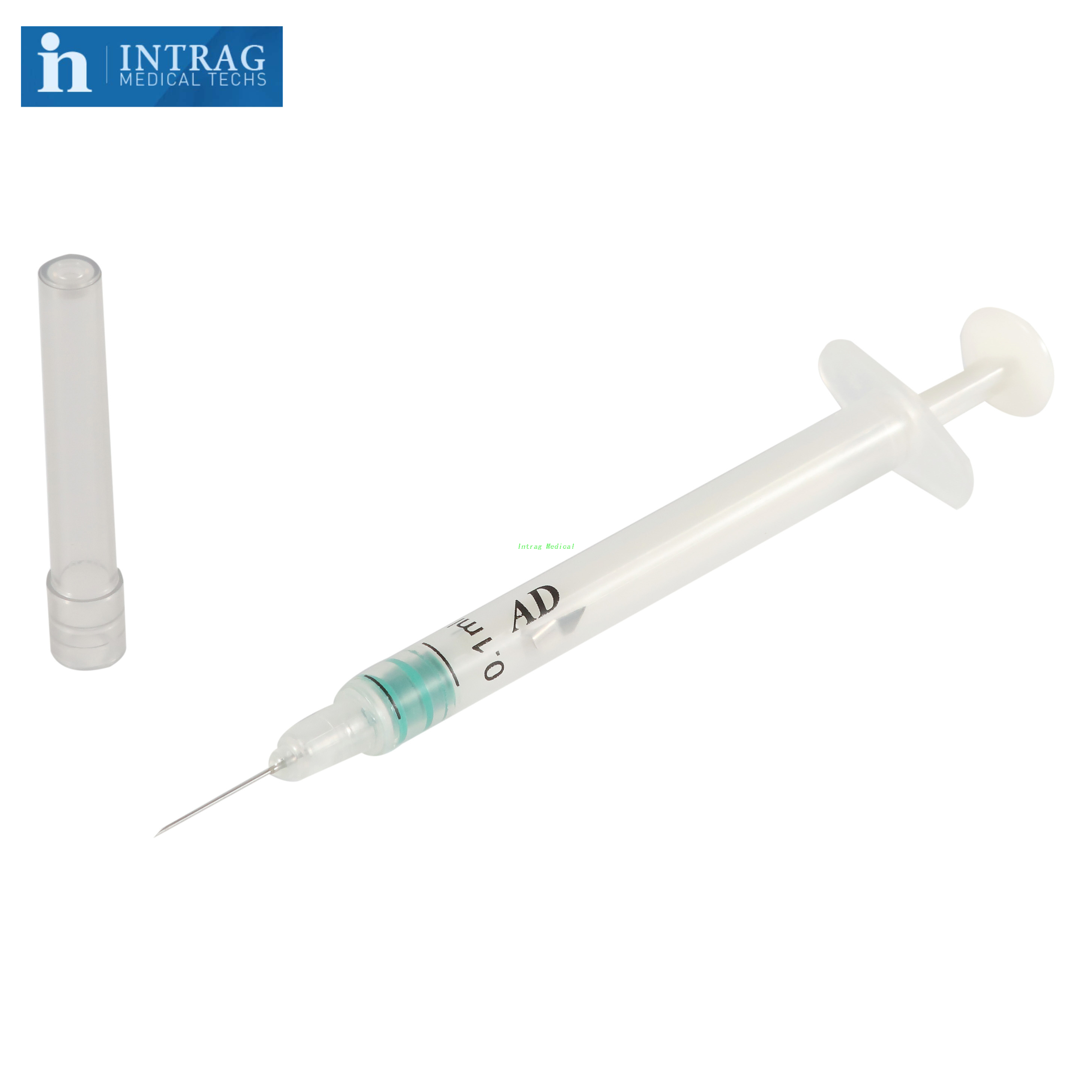
The reuse of standard injection equipment presents severe clinical and financial risks across global healthcare networks. Bloodborne pathogen transmission, specifically HIV, Hepatitis B (HBV), and Hepatitis C (HCV), remains a critical threat in high-volume clinical and immunization settings. World Health Organization statistics consistently demonstrate that unsafe injection practices contribute significantly to the global burden of disease, highlighting a fundamental failure in policy-based compliance. Standard syringes rely entirely on human intervention and strict adherence to protocols to prevent reuse. In resource-constrained, high-stress, or understaffed environments, these administrative controls routinely fail.
To eliminate this risk, healthcare facilities must transition to engineered safety devices. The auto disable syringe provides a mechanical, fail-safe solution that entirely removes human error from the equation. By physically preventing a second use, these devices protect patients and healthcare workers alike. This technical evaluation guide assists health administrators and procurement officers in understanding these mechanisms, assessing compliance standards, and selecting the optimal equipment for their facilities.
Mechanical Enforcement: Auto disable syringes utilize passive or active mechanisms—such as plunger locks, breaking points, or needle retraction—to render the device physically inoperable after a single use.
Regulatory Imperative: Transitioning to AD syringes aligns with WHO guidelines for safe injection practices, directly impacting facility compliance, minimizing iatrogenic transmission, and reducing institutional liability.
Wastage Reduction: High-quality AD injection products feature low dead-space designs, which are critical for maximizing dose efficiency in expensive or scarce vaccine campaigns.
The Mechanics of an Auto Disable Syringe: How It Prevents Reuse
Understanding exactly how a device fails after use is critical for matching the syringe type with specific clinical applications, such as fixed-dose immunization versus variable-dose curative care. The core function of these devices relies on engineered physical barriers that activate during or immediately after the injection process. Procurement teams must evaluate these mechanisms to ensure they align with the specific workflows of their clinical staff.
Plunger Locking Mechanisms (Clips and Rings)
Plunger locking systems utilize an internal metal clip or a specialized plastic ring situated inside the syringe barrel. This mechanism is designed for unidirectional movement. It allows the plunger to move upward to draw medication and downward to inject the fluid. However, once the plunger reaches the bottom of the barrel, the clip or ring engages.
If an operator attempts to pull the plunger back for a second draw, the locking mechanism permanently secures the plunger in place. These locks can be active, requiring a specific manual push by the user to engage, or passive, automatically engaging at the end of the injection stroke without any additional user input. Passive systems offer higher security by removing the reliance on user activation. In field operations, passive locks prevent accidental bypasses during high-volume vaccination drives.
We often see facilities struggle with active locks because staff forget to engage them during rushed shifts. Passive locks eliminate this variable entirely. The internal ring simply snaps into a groove on the plunger rod, creating a physical barrier that cannot be overcome without destroying the barrel itself.
Plunger breaking mechanisms rely on the structural design of the plunger rod itself. The rod is manufactured with a specifically engineered weak point, typically a scored or thinned section near the thumb press. During normal operation, the structural integrity is sufficient to draw and push the medication.
Once the injection is complete and the plunger is fully depressed, a locking ring at the base of the barrel engages the plunger tip. If force is applied to retract the plunger, the resistance from the lock exceeds the tensile strength of the scored section. The plunger rod snaps in half, leaving the rubber piston permanently lodged at the bottom of the barrel and rendering the syringe entirely useless.
This visual confirmation of destruction is highly effective. Supervisors can easily inspect disposal bins and verify that the equipment has been properly disabled. The breaking force required is calibrated to be low enough that any standard user will snap it upon retraction, but high enough to withstand the normal pressure of a standard injection.
Needle Retraction Systems
Needle retraction systems integrate a spring-loaded hypodermic needle directly into the syringe hub. This design addresses both reuse prevention and sharps injury protection. The activation process occurs upon the full depression of the plunger.
When the plunger reaches the end of its stroke, it triggers a release mechanism that unlatches the compressed spring. The spring instantly pulls the needle back into the empty syringe barrel. This dual-benefit design physically prevents anyone from reusing the device while simultaneously eliminating the risk of needle-stick injuries during disposal, completely removing the dangerous practice of manual needle recapping.
In emergency departments or infectious disease wards, retraction systems are the gold standard. The immediate removal of the sharp hazard protects the administering nurse the second the dose is delivered. The barrel then acts as a protective casing for the contaminated needle.
Standard Disposable Syringe vs. Auto Disable Syringe: Evaluating the Shift
Comparing legacy equipment against engineered safety devices establishes a clear baseline for facility upgrades. The transition requires evaluating the physical vulnerabilities of older models against the mechanical guarantees of modern designs. Facilities must look at the actual field usage rather than just the intended protocols.
The Limitations of the Standard Disposable Syringe
The traditional disposable syringe relies heavily on user compliance and administrative controls for safe disposal. Structurally, these devices are durable enough to withstand multiple uses. In under-resourced or illicit scenarios, the smooth, unrestricted barrels allow the devices to be washed, rinsed, and reused repeatedly. This physical durability, combined with a lack of mechanical fail-safes, makes standard syringes a primary vector for cross-contamination when clinical protocols are ignored or bypassed.
We have observed numerous instances where standard syringes are repackaged and sold in informal markets. The lack of a disabling feature means the device looks functional even after contamination. This visual deception is what drives the high rates of secondary infections in regions lacking strict medical waste incineration protocols.
Mechanical Differences and Fail-Safes
The structural differences between standard and auto disable models dictate their safety profiles. The following table outlines the primary mechanical distinctions and their direct impact on clinical safety:
Integrated locking rings or retaining clips that restrict reverse movement.
Plunger Rod
Solid construction, withstands repeated pulling and pushing.
Engineered weak points (scored) for deliberate breakage upon retraction.
Needle Integration
Standard Luer slip or lock, easily removable and swappable.
Fixed needles or spring-loaded retraction systems built into the hub.
Reuse Potential
High; physically capable of multiple uses if washed.
Zero; mechanically disabled and structurally compromised after one full stroke.
Visual Verification
None; a used syringe looks identical to a new one once cleaned.
Clear; broken plungers or retracted needles provide immediate proof of use.
Infection Control and Liability Mitigation
Epidemiological data consistently shows a direct correlation between the adoption of auto disable syringes and a significant drop in iatrogenic infections. By removing the physical possibility of reuse, facilities drastically reduce the transmission rates of bloodborne pathogens. This transition serves as a core risk management strategy for hospital networks, ministries of health, and non-governmental organizations, shielding them from the liability associated with healthcare-acquired infections and ensuring a higher standard of patient safety.
When a facility implements these devices, the incidence of patient-to-patient transmission drops to near zero for injection-related vectors. This protects the institution from malpractice claims and regulatory fines associated with outbreak investigations.
Evaluation Dimensions for Sourcing Injection Products
Selecting the appropriate devices requires assessing features-to-outcomes, scalability, and strict regulatory compliance. Evaluating vendors based on these dimensions ensures the procured equipment meets clinical demands and performs reliably in the field.
WHO Performance, Quality and Safety (PQS) Compliance
Regulatory compliance is non-negotiable when sourcing medical devices. Procurement teams must look for adherence to specific ISO standards. ISO 7886-3 specifies the requirements for auto-disable syringes intended for fixed-dose immunization, ensuring the device locks after a precise volume is delivered. ISO 7886-4 outlines specifications for syringes with re-use prevention features designed for variable-dose curative care.
Facilities must require WHO PQS pre-qualification certificates from manufacturers. This certification guarantees that the devices have been rigorously tested and meet the global standards required for safe, effective use in diverse clinical environments. Without this certification, facilities risk purchasing substandard equipment that may fail to lock or break prematurely during use.
Dead Space Volume and Dose Efficiency
"Dead space" refers to the residual fluid remaining in the syringe hub and needle after the plunger is fully depressed. In standard syringes, this wasted volume can be significant. Low dead-space auto disable syringes are engineered to minimize this gap, ensuring almost all drawn fluid is injected into the patient.
This feature is a critical success criterion for mass vaccination campaigns. By minimizing wasted medication, clinicians can frequently extract an extra dose from multi-dose vials. When dealing with scarce or expensive vaccines, this dose efficiency translates to wider population coverage and optimized resource utilization. We calculate that low dead-space designs can save up to 15% of the total vaccine volume in a large-scale rollout.
Fixed vs. Detachable Hypodermic Needles
The choice between fixed and detachable needles depends heavily on the intended clinical use case. Fixed needles are permanently attached to the syringe barrel. They offer lower dead space, higher security, and make it impossible to dismantle and reuse the needle separately. They are ideal for mass immunization.
Detachable needles provide flexibility, allowing clinicians to draw medications with a larger gauge needle and inject with a finer gauge. However, this flexibility introduces a higher risk profile, as the needle can be removed and potentially mishandled. Facilities must weigh the need for clinical flexibility against the stringent requirements of infection control.
Needle Type
Primary Advantage
Primary Disadvantage
Best Use Case
Fixed Needle
Lowest dead space, highest security against tampering.
Cannot swap gauges for drawing vs. injecting thick fluids.
High-volume, fixed-dose immunization campaigns.
Detachable Needle
High clinical flexibility for complex medication preparation.
Higher dead space, risk of needle removal and separate reuse.
Variable-dose curative care in controlled hospital settings.
Raw Material Integrity & Sterilization Standards
The integrity of injection products relies on the quality of raw materials and sterilization processes. Devices must be manufactured from medical-grade polypropylene that is non-toxic, biocompatible, and free from latex to prevent allergic reactions. Furthermore, manufacturers must provide validation of their sterilization processes. Regulatory clearance requires certificates proving effective sterilization using either Ethylene Oxide (EO) gas or Gamma radiation, ensuring the devices are entirely sterile upon opening.
Overall Value Influencing Factors: Cost and Supply Chain Trade-offs
Balancing upfront procurement expenses against logistical realities and long-term operational savings is a critical function of healthcare administration. The evaluation must extend beyond the initial invoice price to understand the true impact on the facility's budget.
Long-Term Value vs. Initial Procurement Cost
While auto disable syringes carry a marginally higher initial unit cost compared to standard disposable options, the long-term financial benefits heavily outweigh this premium. The value model must factor in the avoidance of expensive post-exposure prophylaxis (PEP) for staff who might otherwise suffer needle-stick injuries. Furthermore, facilities reduce the financial burden of litigation and the massive costs associated with treating healthcare-acquired infections. When combined with the savings realized from low dead-space dose conservation, the overall financial impact is highly favorable.
Packaging Density and Freight Scalability
The physical dimensions of engineered safety mechanisms impact packaging volume. Bulky retractable models, which house internal springs and retraction chambers, often require larger blister packs than standard syringes. This increased packaging density directly affects freight scalability.
For large-scale procurement, increased volume means higher international freight costs and a larger footprint in cold-chain storage or facility warehouses. Planners must calculate these logistical variables to ensure the supply chain can accommodate the physical volume of the upgraded inventory without causing storage bottlenecks. We recommend conducting a volumetric analysis of current warehouse space before committing to a specific retractable model.
Implementation Risks and Mitigation Strategies
Deploying new medical devices across a healthcare network introduces operational friction. Addressing these implementation realities proactively ensures a smooth transition and maintains clinical efficiency.
End-User Training and "Premature Activation" Friction
The most critical risk during the rollout of auto disable syringes is premature activation. If clinicians are accustomed to standard syringes, they may accidentally lock the AD syringe before drawing the medication or during the air-purging step by pushing the plunger past the activation threshold.
To mitigate this, facilities must mandate vendor-supplied training materials and conduct pilot rollouts. Training must focus heavily on the specific "draw, purge, and push" protocols unique to the chosen mechanism, ensuring staff understand exactly when and how the locking feature engages. Hands-on practice with saline solution is the most effective way to build muscle memory for the new devices.
Sharps Management and Safe Disposal Volume
While auto disable syringes effectively prevent reuse, they are still medical sharps that require rigorous disposal protocols. Retractable needle designs significantly reduce the risk of needle-sticks during the disposal process, but the physical devices still need to be managed.
Administrators must evaluate the capacity of existing safety boxes and incinerators. Retractable models often reduce the physical space occupied in sharps containers because the needle no longer protrudes, allowing for denser packing. However, the overall volume of plastic waste must still be accounted for in the facility's waste management strategy.
Conclusion
The transition to auto disable syringes is a foundational requirement for modern infection control, risk management, and adherence to international public health standards. By physically removing the capacity for human error and intentional reuse, these devices secure the safety of both patients and medical personnel.
When shortlisting vendors, select ISO 7886-3 compliant plunger-lock or break designs for cost-effective mass immunization campaigns. For high-risk clinical environments where needle-stick prevention is equally prioritized, ISO 7886-4 compliant retractable needle designs offer the highest level of comprehensive protection.
Audit current facility inventory to identify all legacy standard disposable syringes scheduled for replacement.
Request comprehensive WHO PQS and ISO compliance documentation from all prospective suppliers before finalizing procurement contracts.
Initiate clinical trials with sample auto disable units to assess user compatibility, evaluate dead space efficiency, and train staff to prevent premature activation waste.
Upgrade facility sharps management protocols to accommodate the specific physical dimensions of the newly selected safety devices.
FAQ
Q: What is the main difference between a disposable syringe and an auto disable syringe?
A: Standard disposable syringes can physically be reused multiple times if clinical protocols are ignored. In contrast, auto disable syringes feature engineered mechanical locks, breakable plungers, or retractable needles that physically prevent the plunger from being pulled back a second time, rendering the device inoperable after a single use.
Q: What is the difference between ISO 7886-3 and ISO 7886-4?
A: ISO 7886-3 outlines the specifications for auto-disable syringes intended specifically for fixed-dose immunization, ensuring exact volume delivery. ISO 7886-4 covers syringes with re-use prevention features designed for variable-dose applications and general curative care, accommodating different medication volumes.
Q: How do clinicians avoid premature locking of an auto disable syringe?
A: Clinicians must follow specific handling protocols. They must not push the plunger forward prior to drawing the dose. Any downward stroke past a certain engineered threshold or full depression will trigger the safety lock mechanism, permanently disabling the syringe before the medication is drawn.
Q: Can an auto disable syringe be used for drawing blood?
A: Generally, no. Most auto disable syringes are designed for single-dose fluid injection and lock immediately after one plunger depression. They are unsuitable for procedures requiring multiple aspirations, complex fluid drawing, or vacuum-based blood collection, which require specialized diagnostic equipment.
Q: How does a retractable hypodermic needle work in an AD syringe?
A: A retractable needle utilizes a spring-loaded mechanism housed within the syringe hub. Once the medication is fully dispensed and the plunger hits the bottom of the barrel, it triggers a release that automatically pulls the needle back into the empty barrel, providing passive protection against reuse and needle-sticks.
Q: Are auto disable syringes required by the WHO?
A: Yes, the World Health Organization implemented a global policy recommending the exclusive use of smart syringes, which includes auto disable models, for all injections. This mandate aims to eliminate the transmission of bloodborne diseases caused by the reuse of contaminated injection equipment.
Q: Do auto disable syringes increase medical waste?
A: They do not inherently increase the volume of plastic per unit compared to standard syringes of the same size. In fact, retractable designs can decrease the physical space occupied in sharps containers by pulling the protruding needle inside the barrel, allowing for safer and denser disposal packing.
Providing "High Quality Products, Excellent Service, Competitive Prices and Prompt Delivery", we are now looking forward to have greater and further cooperation with customers all over the world, based on mutual benefits.