
Views: 0 Author: Site Editor Publish Time: 2026-07-31 Origin: Site


Pediatric and neonatal care operates on a strict zero-tolerance threshold for dosing errors. In these environments, minor volumetric discrepancies lead directly to severe adverse events. Administering a fraction of a milliliter incorrectly alters the therapeutic index of highly concentrated suspensions, risking toxic overdose or therapeutic failure. Standard parenteral syringes and poorly designed dispensers consistently introduce severe risks to the clinical workflow. These include cross-connection errors, inaccurate low-volume measurements below 1 mL, and patient discomfort that causes medication rejection.
Transitioning to purpose-built, compliance-driven pediatric dispensers directly mitigates these clinical risks. A well-engineered Oral Syringe standardizes administration workflows and aligns with global safety mandates. By prioritizing exact dosing mechanisms and physical safety barriers, healthcare facilities protect vulnerable patients while streamlining pharmacy and nursing operations. Procurement teams must evaluate these tools based on strict mechanical and material standards rather than treating them as generic consumables.
Volumetric Precision is Non-Negotiable: Effective pediatric syringes must support micro-dosing accuracy, often requiring clear verification of doses as small as 0.01 mL (equivalent to 1/10th of a drop) or precise 0.2 mL increments.
ENFit Compliance Drives Safety: Adoption of ISO-standardized enteral connectors eliminates the risk of accidental intravenous administration of oral medications.
Tip Design Impacts Compliance: Soft, anatomically appropriate syringe tips reduce infant discomfort and minimize the risk of oral trauma during administration.
Pediatric medication delivery demands exact dosing, zero cross-connection risk, and high patient acceptance. Standard medical equipment fails to meet these baseline requirements. Specialized designs address the unique anatomical and physiological needs of infants and children. Clinical directors and procurement officers must understand the mechanical failures of standard syringes to specify the correct alternatives.
Standard syringes contain significant dead space at the tip and within the hub. This dead space retains fluid after the plunger is fully depressed. When measuring low volumes, this retained fluid causes substantial dosing inaccuracies. For a neonate receiving a 0.2 mL dose of digoxin, a dead space volume of 0.05 mL represents a 25% dosing error. High-fidelity graduated markings are essential to combat this. These markings must remain legible under harsh clinical lighting and during home use.
Measuring highly concentrated pediatric suspensions requires absolute precision. A variance of just 0.1 mL drastically alters the therapeutic effect. Clear, accurate graduation lines are a clinical necessity. Pharmacy compounding workflows rely on these markings to verify doses before dispensing to the ward. If the ink smudges or the lines are too thick, the pharmacist cannot guarantee the volume. We see this frequently with generic syringes where the graduation line itself covers 0.02 mL of barrel space, making micro-dosing a guessing game.
To illustrate the impact of dead space, consider the following volumetric retention data across different syringe types:
Syringe Type |
Average Dead Space Volume |
Impact on a 0.5 mL Dose |
Clinical Recommendation |
|---|---|---|---|
Standard Luer-Slip (3 mL) |
0.07 mL - 0.09 mL |
14% - 18% Error |
Do not use for pediatric micro-dosing. |
Standard Luer-Lock (3 mL) |
0.08 mL - 0.10 mL |
16% - 20% Error |
Strictly prohibit for oral/enteral use. |
Low Dead-Space Oral (1 mL) |
< 0.02 mL |
< 4% Error |
Standard for neonatal intensive care. |
ENFit Enteral (1 mL) |
< 0.03 mL (with specific tip) |
< 6% Error |
Required for all enteral tube administrations. |
Historically, using standard Luer-slip or Luer-lock syringes for enteral solutions presented severe risks. Accidental attachment of an enteral feed or oral medication to an intravenous line causes catastrophic patient harm. Liquid medications formulated for the GI tract contain excipients, flavorings, and non-sterile components that are fatal if introduced directly into the bloodstream. Clinical mandates now strictly isolate oral and enteral preparations from parenteral lines. Non-parenteral products are completely prohibited in parenteral syringes.
The transition to ENFit (ISO 80369-3) standards physically prevents these errors. ENFit connectors feature a unique design that cannot connect to standard IV ports. The male/female orientation is reversed compared to Luer systems, and the thread pitch is incompatible with IV hubs. This ensures an oral medication syringe is never mistakenly administered intravenously. Implementing ENFit requires a system-wide overhaul of pharmacy filling adapters, ward dispensing protocols, and bedside administration techniques.
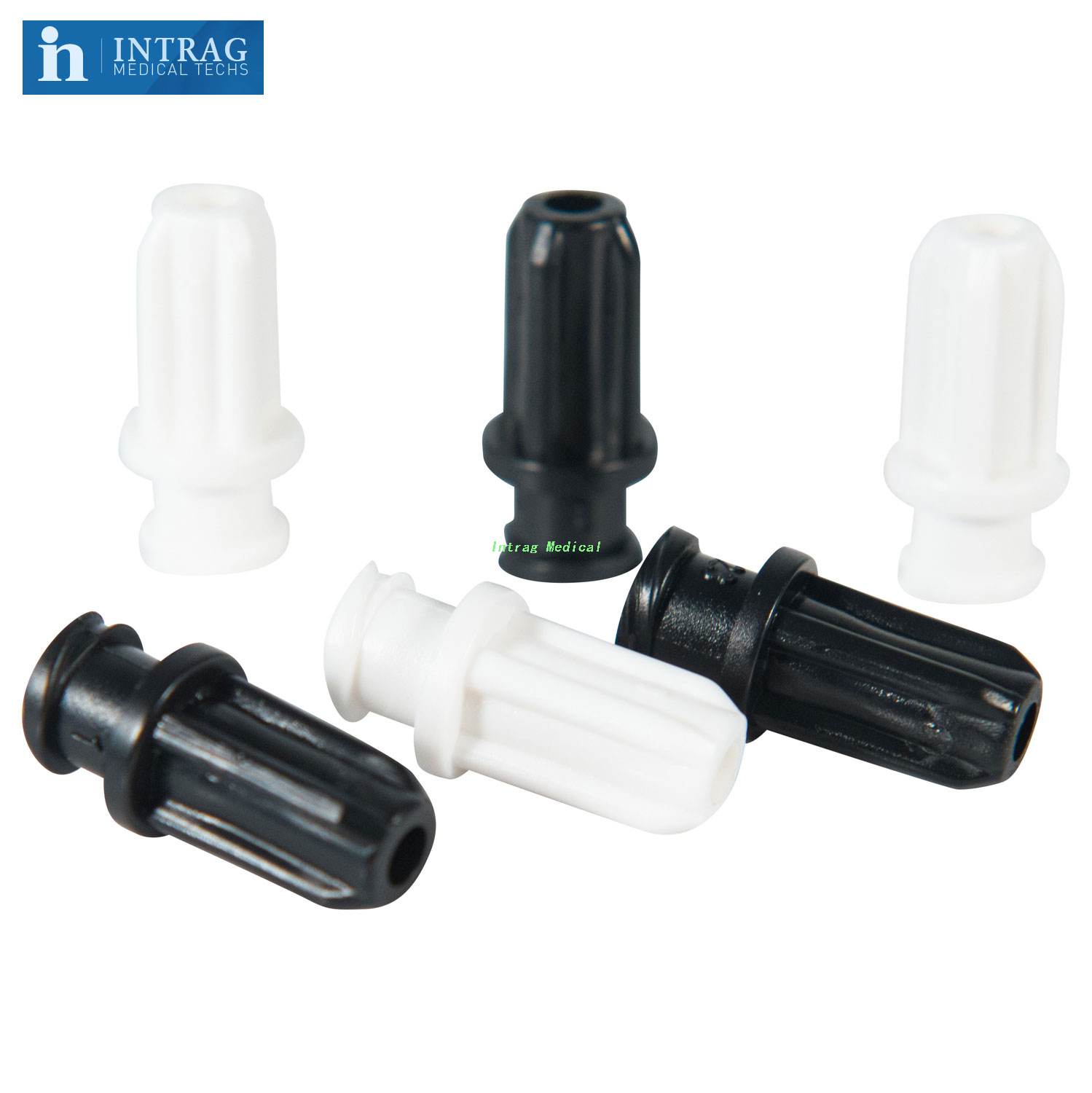
High-quality pediatric syringes feature specific anatomical and mechanical components. These elements differentiate them from generic dispensers, focusing heavily on accuracy and patient safety. Procurement specifications must detail these exact features to avoid purchasing substandard equipment.
High-contrast, indelible ink is required for volume increments. The markings must withstand handling and exposure to liquid medications without smudging. UV-cured inks generally outperform heat-stamped markings in clinical environments. Cognitive load errors frequently occur when intermediate graduation lines lack numerical labels. For example, 0.2 mL increments on a 10 mL syringe confuse users if not explicitly marked. Procurement teams must demand explicit, readable marking schemas to prevent decimal errors.
Clear barrels are necessary for visual inspection. Nurses and parents must inspect the liquid for air bubbles, particulates, or incomplete mixing before administration. Opaque or heavily tinted barrels obscure this vital safety check. When drawing up viscous suspensions, air bubbles easily become trapped against the plunger gasket. A highly transparent medical-grade polymer allows the clinician to spot the bubble, flick the barrel, and expel the air to ensure an accurate volumetric draw.
Specify UV-cured or laser-etched graduation markings to prevent degradation from lipid-based medications.
Require a minimum of 90% light transmission through the barrel polymer for clear visual inspection.
Mandate numerical labeling on at least every major increment (e.g., every 1 mL on a 5 mL syringe).
Ensure the zero-line aligns perfectly with the interior flat of the plunger gasket.
Plunger gasket materials dictate the smoothness of administration. Silicone or latex-free synthetic rubber gaskets provide stutter-free actuation. This smooth movement is critical during slow administration to prevent choking. If a plunger sticks and then suddenly releases (stiction), it shoots a jet of liquid into the infant's throat, causing aspiration. Manufacturers often use medical-grade silicone oil to lubricate the barrel, but excessive oil interacts with certain drug formulations. High-end designs utilize inherently lubricious polymers to eliminate the need for added silicone oil.
Low dead-space designs feature a plunger tip that extends fully into the syringe nozzle. This ensures the full measured dose is delivered, preventing medication waste and dangerous under-dosing. The geometry of the plunger tip must perfectly match the interior cone of the syringe hub. Even a millimeter of mismatch creates a void where medication pools. For expensive or highly potent liquid medications, this pooling represents both a clinical risk and a financial loss over thousands of doses.
Rigid plastic tips damage delicate pediatric oral mucosa. Soft, elastomer-coated tips protect the infant's mouth and minimize discomfort. Tip geometry influences administration techniques. Caregivers direct medication slowly to the side or back of the cheek pouch. This technique bypasses taste buds, prevents choking, and coordinates well with feeding aids like pacifiers. Patient-centric designs facilitate this process, improving medication acceptance.
We evaluate tip architecture based on the durometer (hardness) of the plastic. Standard polypropylene tips have a high Shore D hardness, making them unyielding against gums. Overmolding the tip with a Thermoplastic Elastomer (TPE) drops the hardness to a Shore A level, providing a cushioning effect. This is particularly useful for teething infants who tend to bite down on the dispenser during administration.
Emerging pediatric multiparticle formulations, such as micro-pellets, bypass liquid stability challenges. They demand specialized dispensing adaptations. Standard syringes often clog or crush these delicate beads. Specialized syringe chambers prevent shearing or crushing during administration. This maintains the integrity of the multiparticulate formulation, ensuring the correct extended-release or targeted-release properties are preserved upon delivery.
When administering sprinkles or beads suspended in a carrier fluid, the internal diameter of the syringe tip must exceed the maximum diameter of the largest particle by at least 50%. If the orifice is too narrow, the particles bridge across the opening, creating a jam. The clinician then applies more pressure to the plunger, which eventually forces the jam through, crushing the enteric coating of the beads and ruining the drug's pharmacokinetic profile.
Medical-grade consumables require strict raw material selection and production standards. Compliance and scalability are critical evaluation dimensions for any healthcare facility. You cannot compromise on polymer quality when dealing with pediatric patients.
Manufacturers utilize medical-grade polypropylene (PP) and polycarbonate (PC) for syringe barrels. These polymers offer excellent clarity and chemical resistance. Polypropylene is the industry standard due to its balance of cost, clarity, and inertness. Polycarbonate offers superior impact resistance and glass-like clarity but requires strict vetting to ensure it is free of Bisphenol A (BPA). Syringes must be BPA-free, DEHP-free, and latex-free. This prevents chemical leaching into lipid-based or acidic liquid medications.
Chemical compatibility protects pediatric patients from exposure to harmful plasticizers or allergens during their treatment. Certain liquid medications, particularly those with high alcohol content or specific lipid emulsions, extract plasticizers from inferior materials. We require manufacturers to provide extractable and leachable (E&L) testing data for their polymers against standard solvent panels.
High-volume pediatric wards rely heavily on single-use models. A disposable syringe provides unmatched infection control benefits and workflow efficiency. Reusable oral dispensers present significant risks. Sterilization limitations often lead to bacterial contamination. Repeated washing causes physical degradation of the graduated markings, severely compromising dosing accuracy over time. Single-use models eliminate these risks entirely.
In a clinical setting, the labor required to properly clean, disinfect, dry, and verify a reusable syringe far outweighs the unit cost of a disposable alternative. Furthermore, the interior barrel of a small-volume syringe (e.g., 1 mL) is nearly impossible to scrub mechanically. Biofilms form rapidly in these microscopic scratches, harboring pathogens that are then introduced directly into the patient's gastrointestinal tract during the next dose.
Specific design adaptations serve niche clinical and operational needs. Evaluating these features against patient outcomes ensures facilities stock the correct tools for every scenario. A one-size-fits-all approach fails in pediatric medicine.
Novel syringe designs are engineered specifically for micro-dosing. Capacities of 0.5 mL or 1 mL often feature 0.01 mL increments. Clear needle covers or integrated protective caps add significant utility. They allow precise dose verification while the syringe remains capped. This maintains aseptic integrity during transport from the pharmacy to the patient's bedside, preventing contamination of the syringe tip.
Pharmacy workflows benefit immensely from flat-bottomed caps. When a pharmacist draws up a batch of oral medications, they cap each syringe. A flat-bottomed cap allows the syringe to stand upright on the prep counter. This prevents the medication from resting against the plunger gasket for extended periods, reducing the risk of the gasket swelling or interacting with the drug formulation before administration.
Standard oral dispensers differ from specialized tools used in other departments. An irrigation syringe is typically used for pediatric wound care or specific flushing procedures. These feature curved tips or larger barrel capacities (e.g., 12 mL to 20 mL) designed for volume rather than micro-precision. Similarly, certain dental consumables share design traits with oral dispensers, such as curved elastomer tips for precise placement of topical anesthetics or irrigants.
Procurement departments can consolidate inventory by selecting versatile products. These products must meet multiple clinical safety standards without compromising the specific dosing needs required for pediatric medication administration. However, you must never substitute a non-graduated dental irrigation tool for a calibrated medication dispenser. The primary function dictates the required precision.
Decision-makers must weigh upfront expenses against long-term clinical safety. Value is determined by how well a product reduces adverse events and improves operational workflows. You must look past the unit price and evaluate the clinical mechanics.
Specific design features directly correlate to the reduction of adverse drug events. ENFit tips prevent fatal misconnections. High-contrast markings eliminate decimal reading errors. Evaluating the benefits of premium soft-tip designs versus standard rigid tips requires looking at patient compliance. Soft tips improve patient compliance and reduce administration time. When an infant accepts the medication without fighting, the nurse saves five to ten minutes per administration round.
Consider the workflow impact of a poorly designed plunger. If the gasket lacks proper lubrication, the nurse struggles to draw up viscous liquids like ibuprofen suspension. They pull the plunger, it sticks, they pull harder, and suddenly it snaps back, drawing in a massive air bubble. The nurse must then expel the medication back into the bottle and start over. This wastes time and introduces contamination risks to the bulk medication bottle.
Transitioning a hospital system to new syringe designs introduces friction points. ENFit adoption hurdles and pharmacy filling workflow changes are common challenges. Mitigation strategies require comprehensive planning. Staff training must focus on reading new low-dose increments accurately. Pharmacy protocols require updating to accommodate new capping and dispensing procedures, ensuring a smooth transition without compromising patient safety.
Audit all existing ward inventory to remove legacy Luer-slip syringes before introducing ENFit models.
Update pharmacy automated dispensing cabinets (ADCs) to accommodate the new physical dimensions of the capped syringes.
Conduct hands-on in-services with nursing staff to demonstrate the specific connection mechanics of ISO 80369-3 threads.
Establish a feedback loop with the pediatric ward during the first 30 days of implementation to catch workflow bottlenecks.
Vetting manufacturers requires strict criteria. Suppliers must hold ISO 13485 certification, FDA clearance, or CE marking. Supplier reliability is equally important. Facilities must evaluate the manufacturer's ability to maintain consistent quality across large-volume orders. Consistent supply chain scalability ensures wards never face shortages of critical disposable medical supplies.
You must request the manufacturer's quality management system (QMS) documentation. Review their lot-testing procedures for graduation accuracy. A reliable manufacturer tests a statistical sample of every production run to ensure the 1 mL mark actually delivers 1 mL within a tight tolerance (usually +/- 5%). If the supplier cannot produce these batch records, they are not suitable for medical-grade procurement.
Request physical product samples from multiple manufacturers to evaluate barrel clarity, graduation legibility, and plunger smoothness under actual clinical lighting conditions.
Review manufacturer validation data specifically focused on low-volume dosing accuracy, dead-space measurements, and extractable/leachable testing for polymer safety.
Conduct small-scale usability trials with pharmacy technicians and pediatric nursing staff to identify workflow friction points before finalizing bulk orders.
Verify all selected products hold valid ISO 80369-3 certifications to physically eliminate cross-connection risks across the facility.
A: The primary difference lies in the tip design. Standard syringes feature Luer-lock or Luer-slip tips designed for intravenous access. Oral syringes utilize specialized tips, such as ENFit, which physically cannot connect to IV lines. This prevents the accidental intravenous administration of non-parenteral drugs.
A: ENFit is an ISO standard (ISO 80369-3) designed specifically for enteral feeding and oral dosing. The unique connector design eliminates tubing misconnections. It ensures that oral medications cannot be accidentally attached to parenteral or intravenous delivery systems, drastically enhancing patient safety.
A: Accurate measurement requires using appropriately sized syringes, such as 1 mL or 3 mL capacities. These must feature precise, high-contrast graduated markings. Utilizing syringes with low dead-space plungers ensures that the entire measured volume is delivered without fluid retention at the tip.
A: No, they are not recommended for multiple uses. Repeated washing degrades the barrel markings, leading to dosing errors. Inadequate cleaning introduces a high risk of bacterial contamination. Single-use is clinically recommended to maintain accuracy and hygiene.
A: Syringes should be strictly free of BPA, DEHP, and natural rubber latex. These materials can leach harmful chemicals into lipid-based or acidic liquid medications. Always select medical-grade, biocompatible polymers like polypropylene to ensure patient safety.


