
Views: 0 Author: Site Editor Publish Time: 2026-07-13 Origin: Site


Managing diabetes effectively requires consistent and accurate blood glucose monitoring every single day. At the heart of this vital routine is a highly precise medical instrument. The primary challenge users face involves balancing minimal pain and tissue trauma against securing an adequate blood sample. If the sample size is too small, glucometers return reading errors. This frustrating scenario forces a painful re-test. Conversely, penetrating too deeply causes unnecessary discomfort and persistent bruising.
Testing efficacy relies heavily on understanding needle gauge, device compatibility, and strict hygiene protocols. You must properly match the tool to the specific user. In this comprehensive guide, we will explore exactly how these precision instruments function. You will also learn how to navigate needle sizes, evaluate safety mechanisms, and select the optimal specifications tailored directly to your daily testing requirements.
Purpose: Blood lancets are precision-engineered medical instruments designed to puncture the capillaries safely for blood sampling.
Sizing Matrix: Needle thickness is measured in gauges (G); higher numbers mean thinner needles and less pain, but yield smaller blood volumes.
Safety Imperative: A sterile blood lancet is designed for single use only to prevent infection and tissue damage from blunted needle tips.
Selection Criteria: Purchasing decisions hinge on lancing device compatibility, individual skin thickness, and required sample size.
Daily glucose monitoring demands a specialized approach to obtaining blood. Standard hypodermic needles are highly insufficient for routine finger-prick testing. Traditional needles draw blood directly from veins, which requires deep tissue penetration. This deep entry creates excessive trauma and requires significant healing time. Glucose testing relies on capillary blood instead. Capillaries sit just beneath the skin surface. Accessing them requires a micro-precision tool rather than a standard clinical syringe.
A standard Blood Lancet solves this clinical problem through careful engineering. The anatomy of the tool typically features three primary components:
Molded Plastic Casing: This ribbed or textured base provides stability. It allows the tool to lock securely into a spring-loaded lancing device.
Sterile Needle or Blade: The core puncturing element consists of medical-grade steel. Manufacturers bevel the tip precisely to slice through the epidermis with minimal resistance.
Protective Cap Mechanism: A twist-off or snap-off plastic cap shields the needle. This barrier guarantees the point remains completely sterile until the exact moment of use.
Success in capillary testing requires seamless interaction between the lancet and the lancing device. The lancing device acts as a customizable firing mechanism. Users select a specific depth setting on the device barrel. Upon pressing the trigger, the internal spring propels the needle forward. The device halts the needle at the exact dialed depth. This controlled penetration ensures the needle reaches the shallow capillary beds successfully. Most importantly, it stops the tip before it strikes the deeper nerve endings and pain receptors located further down in the dermis.
Choosing the correct needle specification directly influences patient comfort and testing accuracy. Manufacturers produce these tools in various standard gauge sizes. These sizes typically range from 28G to 33G for daily home testing. Understanding how these sizes operate is critical for securing a viable blood drop.
You must understand the gauge inverse rule. In medical needle sizing, higher gauge numbers equate to thinner needles. For example, a 33G needle is significantly thinner than a 28G needle. This counterintuitive sizing matrix frequently confuses new users. Selecting the wrong size often leads to failed tests or excessive soreness.
Clinical trade-offs exist across the sizing spectrum. Users must match the gauge to their specific physical traits.
Thinner Needles (30G–33G): These ultra-thin options cause the least amount of pain. They are ideal for children, users testing multiple times daily, or individuals with highly sensitive skin. The primary risk involves blood volume. Thinner needles create a very small puncture. They may not produce a large enough blood drop for older glucometer models requiring substantial sample sizes.
Thicker Needles (28G or lower): These options create a slightly larger puncture wound. They are strictly necessary for individuals with callused fingers. Manual laborers or guitar players often require a 28G needle to penetrate thickened epidermis layers. Thicker gauges also guarantee a sufficient blood drop when a specific test demands a larger volume.
Blood Lancet Gauge Sizing Chart |
|||
Gauge Size (G) |
Needle Thickness |
Ideal User Profile |
Blood Volume Yield |
|---|---|---|---|
33G |
Ultra-Thin |
Children, highly sensitive skin, frequent testers |
Very Low (Best for modern meters) |
30G / 31G |
Extra-Thin |
Standard daily users, average skin thickness |
Low to Moderate |
28G |
Standard/Thick |
Callused fingers, manual laborers |
High |
21G / 23G |
Very Thick |
Clinical settings, specific diagnostic tests |
Very High |
A widely accepted evidence-oriented claim states that perceived pain does not rely on gauge size alone. Total comfort results from a combination of three factors. First is the gauge size itself. Second is the selected depth setting on the lancing device. Third is the spring-mechanism stability of the device barrel. A thinner needle fired from a wobbly, unstable lancing device will cause more tissue tearing than a thicker needle fired straight and true.
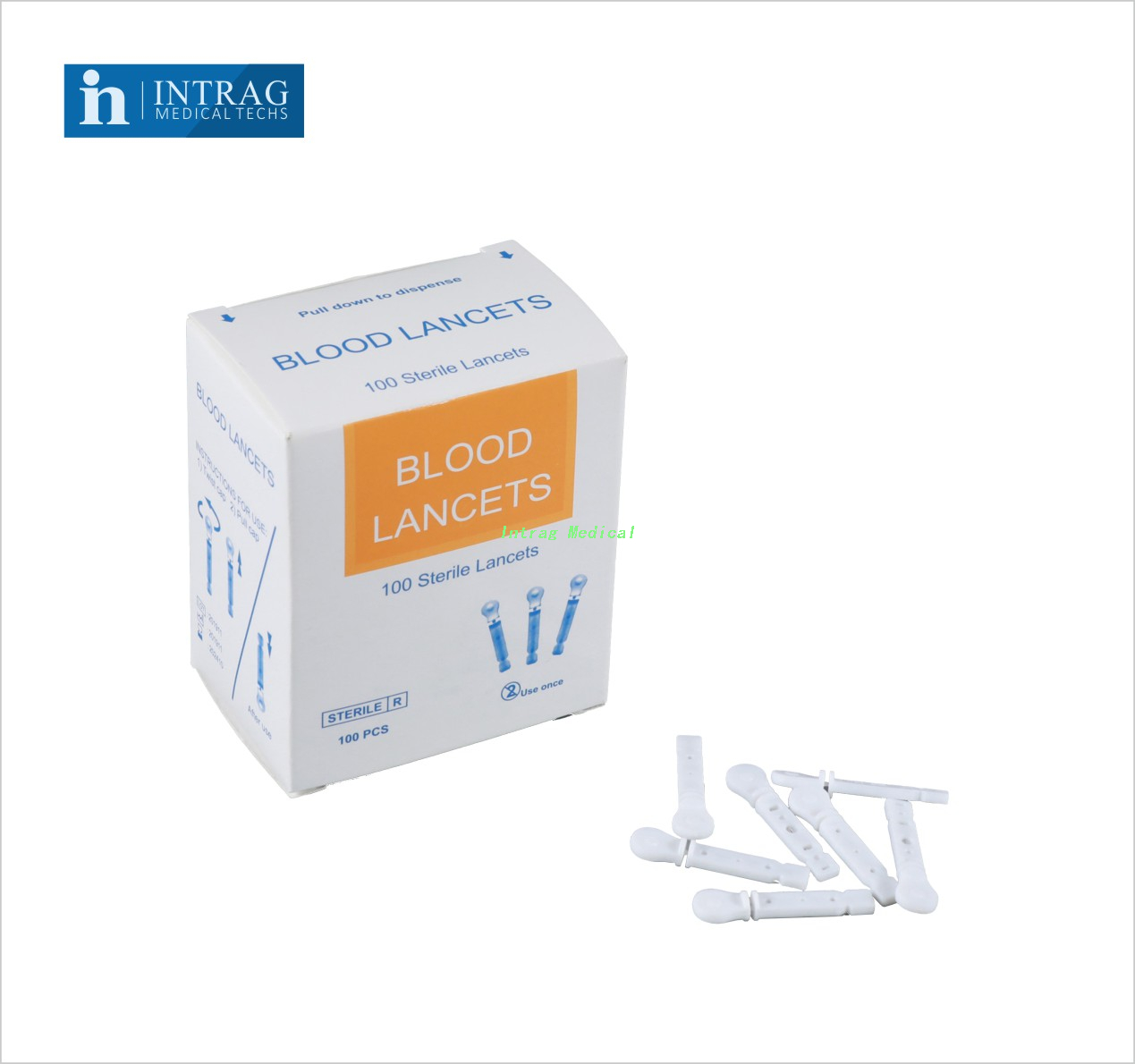
The medical market divides these puncturing tools into two primary structural categories. Users must evaluate these dimensions to match the tool to their specific testing environment. The two main types are standard universal lancets and single-use auto-retracting safety lancets.
Standard Lancets (Universal/Twist-top)
Standard variants feature a molded plastic base with a twist-off cap. They represent the most common choice for individual management.
They require a separate, compatible spring-loaded lancing device to function properly.
They are highly economical for regular, independent home routines.
They offer adjustable depth settings, as the separate lancing device controls the exact penetration distance.
Safety Lancets (Single-Use Auto-Retracting)
Safety variants feature a fully integrated, all-in-one mechanism. The needle remains hidden inside the plastic housing before, during, and after use.
They utilize a push-button or pressure-activated firing mechanism. The needle deploys, punctures the skin, and retracts permanently inside the casing in a fraction of a second.
They are ideal for clinical environments, hospitals, and professional caregivers. They also serve users dealing with severe neuropathy or extreme dexterity limitations.
They completely eliminate accidental needlestick injuries. Because the needle locks away permanently, they severely reduce cross-contamination risks during disposal.
Patients often face the temptation to reuse needles to save time or resources. This practice introduces severe implementation risks. Medical guidelines strictly mandate single-use protocols for all capillary testing tools.
Infection control represents the highest priority in diabetes management. A protective twist-cap guarantees a sterile blood lancet straight out of the packaging box. The moment you expose the needle and puncture the skin, this sterile field collapses. The needle tip immediately picks up skin flora, bacteria, and microscopic debris. If you recap and reuse the tool later, you inject that multiplied bacteria directly back into your bloodstream. This significantly elevates the risk of localized infections and systemic health issues.
Microscopic degradation presents another critical reality. Steel needle tips are incredibly delicate. After just one single puncture, the microscopic tip bends and dulls. Often, the metal curls backward, forming a microscopic fishhook. You cannot see this damage with the naked eye. When you reuse a barbed needle, it no longer slices cleanly. Instead, the hook catches and tears the tissue upon entry and exit. This tearing causes escalating pain, prolonged healing times, and noticeable bruising on the finger pads.
Proper disposal protocols are equally mandatory. The FDA and clinical compliance standards require users to dispose of used sharps safely. You should deposit used needles into an approved, puncture-proof sharps container immediately. This protocol protects household members, children, pets, and municipal sanitation workers from accidental needle sticks.
Never squeeze the finger aggressively after a puncture. "Milking" the finger forces interstitial fluid to mix with the blood drop. This fluid dilutes the sample and routinely causes inaccurate glucometer readings. If the blood does not flow naturally, adjust the depth setting or switch to a thicker gauge.
Navigating the sheer volume of available options requires a logical shortlisting process. The first and most critical step is the compatibility check. Not all needles fit all devices. You must verify your current lancing device requirements. Some proprietary devices utilize drum or cartridge systems. These specific devices will only accept brand-matched modules. However, many standard lancing pens utilize a universal design. These universal pens accept generic square or round-base needles from almost any manufacturer.
Feature-to-outcome mapping helps narrow down specific preferences. Many manufacturers offer multi-colored product boxes. These colorful options serve a practical purpose beyond aesthetics. They prove highly useful for patients with visual impairments. Caregivers also use different colors as memory aids. For example, using a blue needle on Monday and a red needle on Tuesday helps users track their rotation schedule and prevent overuse of a single testing site.
You might also encounter products marketing silicone-coated needles. These brands frequently evaluate their products with claims of "painless" testing. It is important to understand the physics behind this claim. The silicone coating does not eliminate the physical puncture. Instead, the microscopic coating dramatically reduces surface friction. This allows the needle to glide through the epidermis layers more smoothly. A smoother entry translates to less tissue drag, which many users perceive as a less painful experience.
Always wash your hands with warm water and soap prior to testing. Warm water increases blood flow to the extremities, making capillary collection much easier. Ensure your fingers are completely dry before lancing, as leftover water droplets will dilute the blood sample.
Your ideal next-step action involves careful experimentation. We recommend acquiring small sample packs of varying gauges, assuming they are compatible with your device. Testing different sizes allows you to find your personal pain-to-blood-volume ratio. Once you identify the gauge that provides a reliable sample with minimal discomfort, you can confidently commit to larger bulk purchases.
The right puncturing tool effectively bridges the gap between accurate clinical data and patient compliance. If testing hurts less, you are far more likely to maintain a consistent monitoring schedule. Consistent monitoring yields reliable blood sugar readings, empowering better health decisions.
Remember the absolute necessity of single-use practices. Reusing needles damages your skin, increases pain, and introduces severe infection risks. Protecting your long-term capillary health requires a fresh, sterile tip for every single test.
Take action today by reviewing your current supplies. Check your glucometer's exact blood volume requirements. Verify your lancing device compatibility. Then, browse high-quality options to ensure your daily testing routine remains as comfortable and accurate as possible.
A: No. While many standard square or round-base needles fit a wide variety of universal lancing pens, some systems are proprietary. Specific devices require branded cartridges, drums, or uniquely shaped bases. Always check your lancing device manual before purchasing.
A: Yes. You should puncture the side of the finger rather than the direct center of the finger pad. The central pad contains more nerve endings and is used frequently for daily tasks like typing. Testing on the side significantly reduces pain and discomfort.
A: Yes. While the stainless steel needle itself does not expire, the sterility guarantee does. The irradiation process used to sterilize the protective plastic cap typically lasts about five years. After the expiration date, the manufacturer can no longer guarantee the tool remains sterile.
A: Bruising typically results from three main causes. You might be reusing a dull needle that tears the tissue. Your lancing device depth setting might be dialed too deep. Finally, squeezing or milking the finger too aggressively can rupture surrounding capillaries, causing localized bruising.


