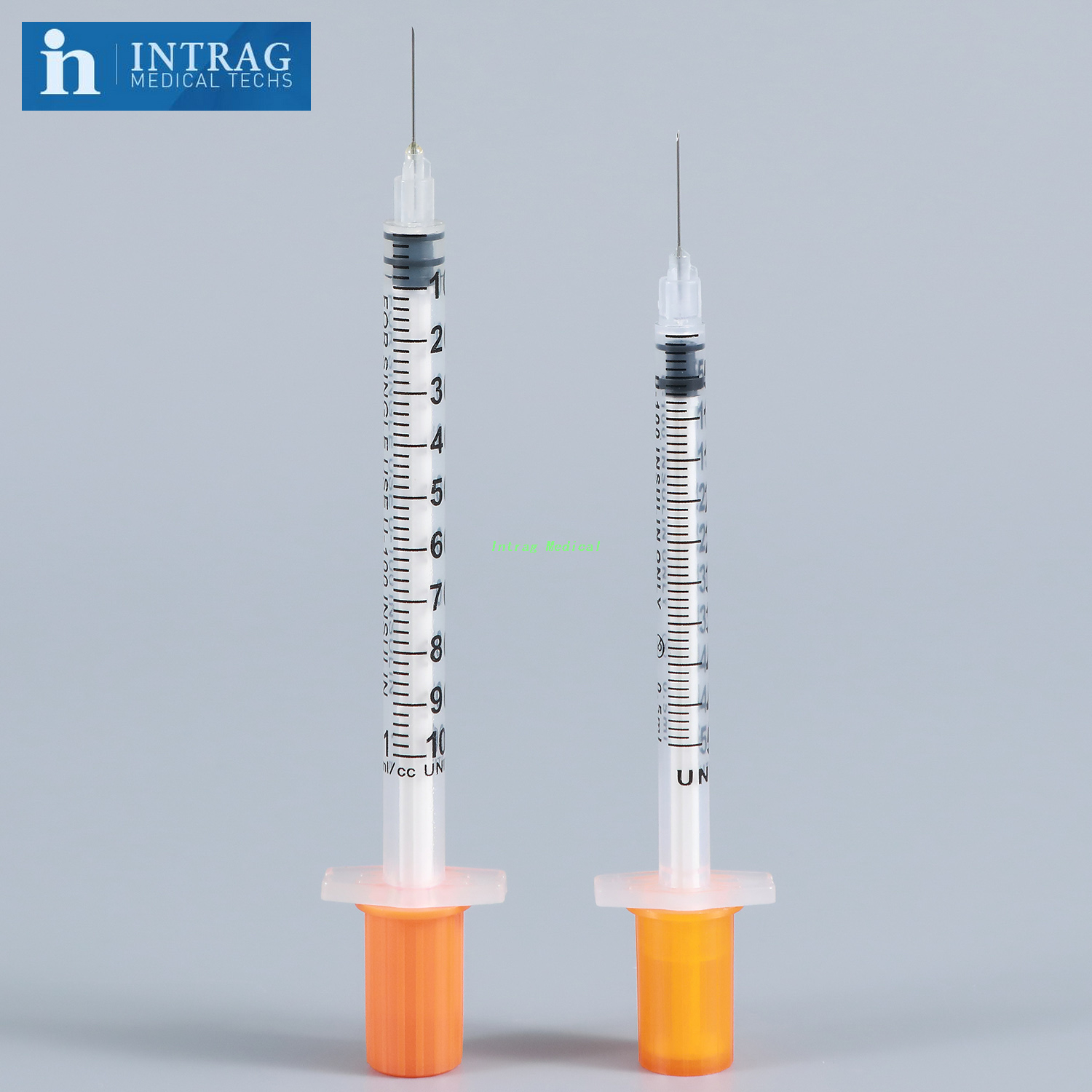
Insulin delivery has evolved dramatically over the decades. We transitioned from boiling heavy glass barrels to utilizing ultra-thin plastics. These modern tools prioritize maximum comfort and uncompromised sterility. Today, precision and patient compliance remain critical priorities in diabetes management. A Disposable Insulin Syringe serves one primary function. It delivers exact subcutaneous doses of insulin safely and reliably. However, not all delivery tools perform equally well. Selecting the correct specification directly impacts dose accuracy. It also affects daily patient comfort and institutional procurement efficiency. In this comprehensive guide, you will learn how to evaluate these medical devices. We cover core anatomy, solution comparisons, and strict compliance standards. You will also discover how to align needle lengths, gauges, and volumes perfectly with specific patient profiles.
Key Takeaways
A disposable insulin syringe is engineered specifically for subcutaneous tissue delivery, featuring U-100 unit markings and low dead space to prevent dosage errors.
Selecting the correct specification requires aligning syringe volume (0.3mL to 1.0mL), needle length, and gauge with patient dose requirements and physical profiles.
While insulin pens offer convenience, disposable syringes remain critical for custom-mixed insulin regimens and cost-effective clinical scalability.
Procurement evaluation must prioritize ISO/FDA compliance, sterility assurances, and built-in safety mechanisms to mitigate needlestick risks.
Core Anatomy and Primary Clinical Uses
Standard medical syringes serve broad clinical purposes. They often accommodate varying fluid viscosities and larger injection volumes. An insulin syringe, conversely, represents a highly specialized medical instrument. It features a permanently attached fixed needle design. This unique construction completely removes the "dead space" found at standard needle hubs. Eliminating this empty void prevents valuable insulin waste. It also stops dangerous miscalculations during daily dosing. You will always find clear U-100 scale markings printed directly on the barrel. These precise markings ensure users measure therapeutic units rather than raw milliliters. This design prevents potentially fatal mathematical conversion errors.
The primary objective centers on precise subcutaneous delivery. Practitioners must successfully bypass the tough outer dermis layer. They must simultaneously avoid hitting deeper muscle tissue. Muscle tissue absorbs injected insulin far too rapidly. Subcutaneous fat provides the optimal, slow absorption rate required for stable glycemic control. Proper depth control prevents sudden spikes or dangerous drops in blood sugar.
Primary use cases span multiple daily clinical scenarios.
Daily patient self-administration for managing Type 1 and Type 2 diabetes effectively.
Clinical and hospital settings requiring immediate, acute glucose management protocols.
Administering customized split-mixed doses to highly specific patient profiles.
Combining intermediate-acting NPH and short-acting regular insulin in one single injection.
Disposable Syringes vs. Insulin Pens: A Solution Comparison
Pre-filled insulin pens dominate many modern consumer markets. They offer portability and pre-measured dosing convenience. However, the traditional syringe system offers unmatched operational scalability. Purchasing generic vials and individual syringes keeps unit costs remarkably low. This cost-efficiency matters immensely for institutional procurement departments. Hospitals routinely use thousands of these units daily. It also provides a critical lifeline for uninsured patient populations worldwide. Managing bulk healthcare budgets requires examining these foundational unit costs carefully.
Flexibility in customized dosing represents another major therapeutic advantage. Patients often require highly specific, tailored regimens to achieve glycemic goals. A traditional syringe allows you to draw and mix two different insulin types. You can pull a rapid-acting fluid and a long-acting fluid into one barrel. This efficient method drastically reduces the total number of daily needle sticks. Fewer daily injections lead to better tissue health and fewer calluses over time.
We must also acknowledge the inherent physical limitations of syringes. Drawing exact doses requires steady hands and fine motor skills. It demands excellent visual acuity from the administering patient. Users must accurately read tiny scale markings on a curved plastic barrel. When dexterity or vision fails, pre-filled pens become the necessary clinical alternative. Facilities should stock both options to serve diverse demographics properly.
Sizing Matrix: Aligning Gauge, Length, and Volume
Choosing the right specification relies on a strict evaluation framework. The capacity-to-dose ratio dictates your optimal volume selection. We call this core concept the volume rule. Using the smallest possible barrel for a specific dose increases measurement accuracy. It spaces the visual markings further apart for easier reading. A 0.3 mL barrel provides wide visual gaps between single units. A 1.0 mL barrel packs measurement lines closely together. This crowding makes tiny doses incredibly hard to read.
Insulin Syringe Volume Selection Matrix
Syringe Volume
Maximum Capacity
Best Used For
0.3 mL
30 Units
Doses under 30 units. This size is easiest for precise 1-unit or half-unit increments.
0.5 mL
50 Units
Moderate doses ranging between 30 and 50 units.
1.0 mL
100 Units
Large regimens requiring up to 100 units per injection.
Needle gauge measures the precise thickness of the metal shaft. Standard manufacturing ranges fall between 28G and 31G. A counter-intuitive inverse mathematical relationship exists here. A higher gauge number indicates a significantly thinner needle. Ultra-thin needles like the 31G drastically increase patient adoption rates. They reduce injection pain and minimize local tissue trauma during insertion.
Needle length must map directly to physical patient profiles. Current clinical guidelines recommend 4mm to 6mm short needles for most demographics. These shorter lengths safely reach subcutaneous tissue reliably. They easily avoid accidental, painful intramuscular injections. Longer needles, ranging from 8mm to 12.7mm, remain widely available on the market. Clinicians reserve these specific lengths for patients displaying higher body mass indexes.
Quality, Safety, and Compliance Standards
Manufacturing baselines require strict oversight and regulatory adherence. Sterility and material safety serve as non-negotiable elements in production. Reputable manufacturers use completely non-toxic, non-pyrogenic materials. Pyrogens can cause severe, immediate fever reactions upon injection. Factories deploy Ethylene Oxide (EO) gas sterilization during the final production stages. This specialized gas penetrates packaging to destroy all microscopic microbial life. Every single unit must arrive in single-use, tamper-evident blister packaging. This packaging guarantees complete sterility right up to the moment of use.
Low dead space efficacy carries significant mathematical weight in diabetes care. Standard detachable hubs trap measurable amounts of fluid inside the mechanism. For highly concentrated U-100 insulin, trapped fluid leads to severe dosage discrepancies. A specialized zero-dead-space design is clinically required today. It prevents both dangerous hypoglycemia and hyperglycemia caused by retained medication.
Workplace safety regulations heavily influence modern syringe design. In the United States, OSHA mandates specific engineered sharps injury protections (SIPs). These critical protections shield workers during administration and post-injection disposal.
Compliance and Safety Engineering Chart
Safety Feature
Function and Compliance Goal
Protective Caps
Maintains tip sterility before use. It prevents accidental pricks during transit and handling.
Needle Guides
Assists users in achieving a perfect 90-degree or 45-degree subcutaneous insertion angle.
Sliding Shields
Locks securely over the used needle post-injection to strictly comply with OSHA sharps regulations.
Integrating these mechanisms protects healthcare workers immensely in fast-paced environments. It also keeps home users completely safe from dangerous, infectious needlestick injuries.
Procurement and Shortlisting Logic for Buyers
Evaluating vendor reliability forms the foundation of smart institutional purchasing. You must identify key performance metrics when choosing a manufacturing partner. Look closely at supply chain stability and strict batch traceability practices. Traceability allows facilities to execute swift product recalls if necessary. Assess the consistency of silicone lubrication on the needle bevel. Manufacturers apply this microscopic coating to reduce tissue friction. Proper microscopic lubrication ensures flawlessly smooth tissue penetration. This attention to detail maximizes overall patient comfort during daily injections.
Inventory mapping prevents dangerous stockouts and poor patient matching. Do not rely on a generic, one-size-fits-all approach to inventory.
Analyze your historical dispensing data to identify the most common dosage ranges.
Stock a heavy ratio of 0.3 mL and 0.5 mL volumes for pediatric and elderly patients.
Keep a strategic reserve of 1.0 mL variants for patients on high-dose therapeutic regimens.
Ensure you carry both short (4mm-6mm) and long (8mm+) needle options for different body types.
You must take actionable next steps to secure the right medical inventory. Use this short checklist for your formal evaluation and procurement process.
Request physical product samples to test bevel sharpness and plunger smoothness firsthand.
Verify ISO 13485 and FDA compliance certificates directly through official regulatory databases.
Assess bulk packaging dimensions to ensure maximum storage efficiency in your supply rooms.
Review independent laboratory reports confirming the total absence of pyrogens and latex materials.
Conclusion
A disposable insulin syringe represents a highly engineered, heavily regulated medical tool. Its clinical effectiveness relies entirely on matching the correct specifications to the individual. Facilities must prioritize precision scale markings, low dead space, and strictly sterile manufacturing processes. Choosing the right needle gauge and length directly improves long-term patient compliance.
Take these definitive next steps to optimize your medical supplies safely:
Audit your current patient demographics to build an accurate sizing matrix.
Consult specific product catalogs to verify modern safety engineering features.
Request comprehensive technical data sheets from your prospective manufacturing partners.
Contact a medical device specialist to align needle specifications precisely with your clinical guidelines.
FAQ
Q: Can a disposable insulin syringe be reused?
A: No. Reusing a syringe degrades the delicate needle bevel, causing significant tissue trauma. It compromises sterility instantly, introducing dangerous bacteria into the subcutaneous layer. Repeated use also increases the risk of lipohypertrophy, which disrupts insulin absorption. Strict single-use policies must be enforced at all times.
Q: What does "U-100" mean on an insulin syringe?
A: U-100 refers to the universal concentration standard for most liquid insulin. It means there are 100 active units of insulin dissolved in 1 milliliter of fluid. You must never use non-U-100 syringes for insulin, as this easily causes severe and fatal dosing errors.
Q: How do I choose between a 30G and 31G insulin syringe?
A: The choice balances fluid viscosity with patient comfort. A 31G gauge offers a thinner, less painful needle. This makes it ideal for daily users sensitive to injection pain. A 30G needle is slightly thicker, which helps push thicker liquid faster, but might cause minor discomfort.
Q: Are all insulin syringes equipped with a low dead space design?
A: While low dead space is standard for integrated-needle models, not all products are equal. Devices with detachable needles usually lack this crucial feature. Buyers must explicitly verify this specification when evaluating new suppliers to prevent continuous medication waste.
Providing "High Quality Products, Excellent Service, Competitive Prices and Prompt Delivery", we are now looking forward to have greater and further cooperation with customers all over the world, based on mutual benefits.