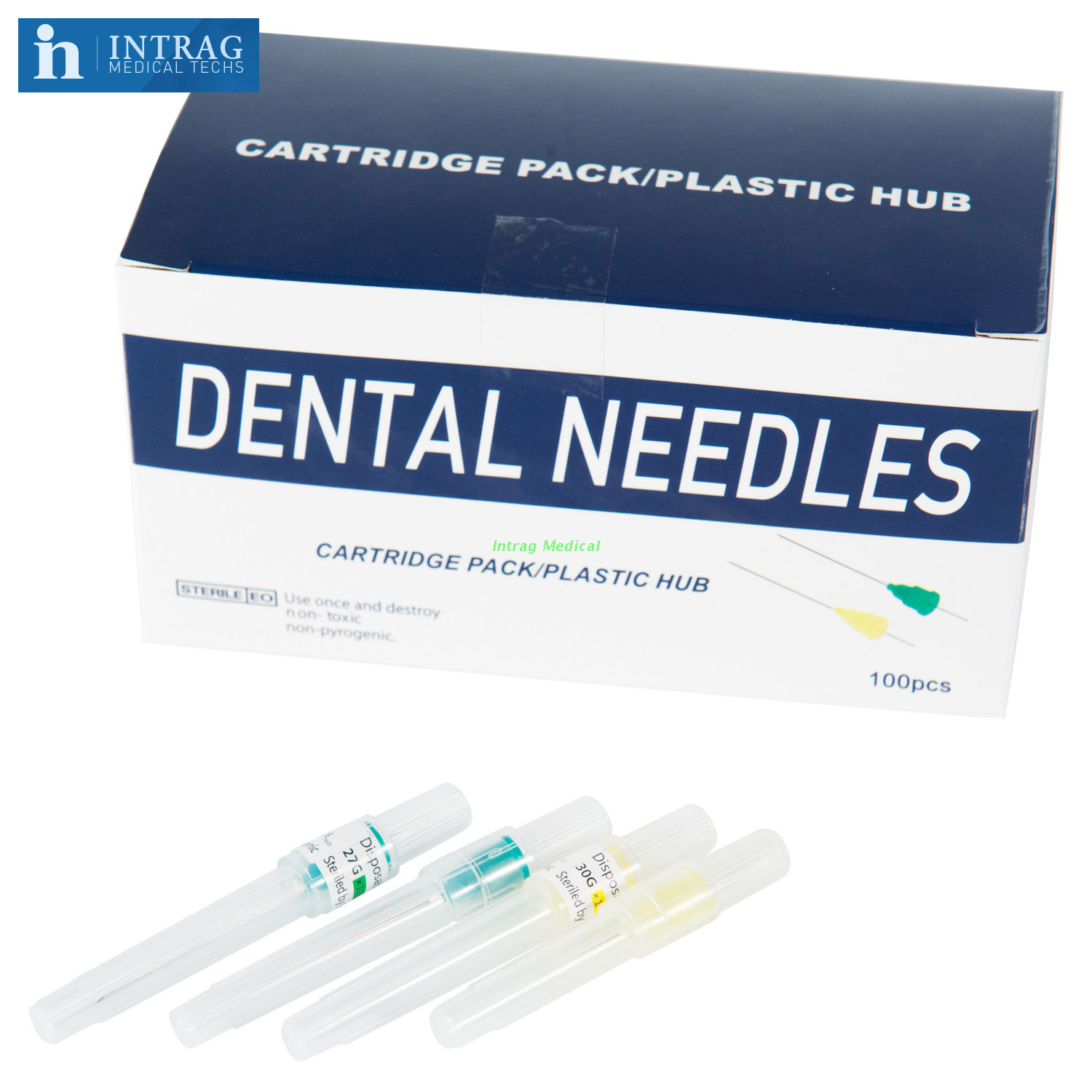
The efficacy of local anesthesia and the baseline of patient trust rely heavily on the precise engineering of the dental injection equipment. Poor needle selection carries significant clinical and liability risks. These include needle deflection, false-negative aspirations, tissue trauma, and catastrophic needle breakage during deep blocks. Procurement managers and clinical directors must look beyond basic inventory lists to assess needle specifications against evidence-based clinical requirements. You need to evaluate gauge, length, bevel geometry, hub design, and cartridge-penetrating ends. This guide provides a technical evaluation framework for selecting reliable anesthetic delivery systems. We focus on the physical mechanics of injection, anatomical variables, and manufacturing tolerances that dictate clinical success. By understanding the structural limits of these instruments, you can standardize your inventory to maximize safety and predictability during routine infiltrations and complex nerve blocks.
Gauge Dictates Deflection, Not Just Pain: Contrary to common assumptions, larger diameter needles (25G) offer superior aspiration reliability and less deflection than 30G needles, with negligible differences in patient pain perception.
Length Must Match Penetration Depth: Selecting the correct length (long vs. short) is critical to ensure the needle is never inserted to the hub, which is the weakest point prone to breakage.
Bevel Orientation Controls Tracking: Proper bevel alignment minimizes tissue tearing and directs the anesthetic solution accurately toward the target nerve.
Cartridge-Penetrating End Integrity: The butt-end of the needle must be engineered as precisely as the patient-end to prevent cartridge diaphragms from tearing and causing anesthetic leakage.
Strict Differentiation in Dental Consumables: Anesthesia needles require distinct evaluation criteria compared to other operatory fluids delivery systems, such as an endo irrigation needle.
The Clinical Impact of Dental Anesthesia Needle Specifications
Deflection Rates, Tissue Density, and Aspiration Reliability
Needle deflection is the deviation of the needle tip from its intended path as it passes through varying tissue densities and thicknesses. The physics of deflection dictate that the bevel angle and needle flexibility cause the shaft to bend. This bending occurs particularly along the axis of the bevel. When you advance a flexible needle through dense muscle or fascial planes, the asymmetrical force on the bevel face pushes the tip off course. This bending can cause the practitioner to miss the target nerve entirely. This is a frequent cause of failed Inferior Alveolar Nerve Blocks (IANB).
Tissue density and thickness directly affect resistance. Thicker tissues exacerbate the deflection of narrower, highly flexible needles. When you use a thin needle for a deep block, the lateral forces multiply over the length of the shaft. Furthermore, the relationship between internal lumen diameter and aspiration reliability is a major safety factor in highly vascular areas. Positive aspiration of blood is harder to detect in narrower needles. The internal resistance of a narrow lumen prevents blood from easily entering the cartridge when you pull back on the plunger. This increases the risk of an intravascular injection, which can lead to systemic toxicity.
To understand the mechanics, consider the internal diameter differences. A wider lumen allows for immediate visual confirmation of blood. A narrow lumen might yield a false negative. You might think you are in a safe zone, but the needle tip is actually resting inside a blood vessel. This is why evaluating the internal diameter alongside the external gauge is a mandatory step for clinical directors.
Tissue Trauma, Patient Comfort, and Vascularity Metrics
Clinical evidence regarding tissue trauma upon insertion and withdrawal requires balancing the injection type against the vascularity of the target anatomical site. The role of silicone coating and the absence of manufacturing burrs on the needle tip are essential in reducing drag. A poorly manufactured tip will tear tissue rather than slice it. This tearing leads to subsequent post-operative tissue necrosis or soreness. High-quality manufacturing ensures a smooth glide path through the mucosa.
Addressing the psychological and physiological realities of pain perception is necessary to debunk the myth that ultra-thin needles inherently guarantee a painless injection. The structural integrity of the needle often plays a larger role in a smooth, atraumatic delivery. A thicker needle that tracks straight causes less internal tissue displacement than a thin needle that bends and tears its way through the muscle. Patients feel the tearing and the pressure of the fluid, not the initial mucosal puncture. Therefore, prioritizing structural rigidity over minimal gauge size often results in better patient comfort.
We also have to look at the withdrawal phase. If a needle develops a microscopic hook at the tip after contacting bone, it will shred tissue on the way out. This is a common issue with lower-quality steel alloys. Evaluating the metallurgical properties of the needle ensures that the tip maintains its shape even after periosteal contact.
Core Technical Dimensions for Needle Evaluation
Gauge Selection (25G, 27G, 30G) and Trade-Offs
The 25-gauge needle remains the standard for deep tissue penetrations and blocks with high vascularity. It provides superior rigidity, minimal deflection, and highly reliable aspiration. When you need to reach the mandibular foramen, the 25G needle tracks true. The wider lumen ensures that if you are in a vessel, you will know immediately. The 27-gauge needle serves as a versatile middle-ground. It is suitable for most infiltration techniques and maxillary blocks. It balances structural integrity with patient comfort for shallower injections.
The limitations of 30-gauge needles include high deflection rates and unsuitability for deep blocks. Their optimal use is restricted to localized, shallow infiltrations and hemostasis control. Using a 30G needle for an IANB is a clinical error due to the high probability of deflection and false-negative aspiration.
Gauge
Primary Clinical Application
Deflection Risk
Aspiration Reliability
25G
Deep blocks (IANB, Gow-Gates)
Low
Excellent
27G
Maxillary infiltrations, regional blocks
Moderate
Good
30G
Palatal injections, local hemostasis
High
Poor
Length Requirements and Penetration Depth
Long needles (approximately 32mm) are necessary for deep injections, such as the IANB or Gow-Gates. These procedures require significant tissue penetration while leaving at least 5mm of the shaft visible outside the tissue. Short needles (approximately 20mm) are evaluated for maxillary infiltrations, supraperiosteal injections, and pediatric applications. Extra-short needles (approximately 10-12mm) serve niche applications such as intraligamentary (PDL) or palatal injections.
Selecting the correct length is a matter of anatomical necessity and safety. You must always have a portion of the needle visible. If a fracture occurs, you need to be able to retrieve the fragment with hemostats. Using a short needle for a deep block forces you to bury the hub into the mucosa, violating basic safety protocols.
Bevel Geometry and Orientation Indicators
Standard bevels, multi-bevels, and scalpel-designed bevels vary in cutting efficiency and tissue displacement. A scalpel-designed bevel slices cleanly, reducing the force required for penetration. The bevel angle directs the needle path, as needles deflect away from the bevel face. Understanding this allows the clinician to anticipate and correct for deflection during insertion.
Bevel indicator marks on the hub allow practitioners to orient the bevel toward the bone. This orientation reduces periosteal trauma. When the bevel faces the bone, the needle slides over the periosteum rather than digging into it. This small manufacturing detail significantly improves patient comfort during supraperiosteal injections.
Hub Construction, Syringe Compatibility, and Cartridge-Penetrating Ends
Evaluating hub threading security involves comparing plastic hubs versus metal hubs. You need secure threading onto the dental syringe to prevent the needle from detaching under injection pressure. The cartridge-penetrating (butt-end) design is equally critical. A dull or off-center butt-end can puncture or tear the rubber diaphragm of the anesthetic cartridge. This leads to leakage under injection pressure, wasting anesthetic and creating a mess in the oral cavity.
A secure fit across the entire syringe, cartridge, and needle assembly prevents fluid blowouts. Hub and sheath ergonomics ensure safe assembly and disassembly by dental assistants. Proper design minimizes accidental needle-stick injuries during disposal. The sheath should lock securely over the hub, providing tactile feedback that it is safe to handle.
Differentiating Anesthesia Needles from Other Dental Consumables
Anesthesia Delivery vs. Endo Irrigation Needles
Within class-wide dental consumables, a dental anesthesia needle is designed for precise tissue penetration and high-pressure fluid delivery into closed spaces. The engineering focuses on sharpness, rigidity, and aspiration capability. Conversely, an endo irrigation needle is designed for canal disinfection. The tip designs differ significantly. Anesthesia needles feature sharp, beveled patient-ends. Endodontic needles utilize blunt, rounded, or closed-end tips with varying structural rigidity to navigate curved root canals without ledging the dentin.
You cannot interchange these instruments. Using an anesthesia needle for irrigation risks pushing sodium hypochlorite past the apex due to the forward-facing bevel and high pressure. Using an irrigation needle for anesthesia is impossible due to the blunt tip.
Why a Side Vent Irrigation Needle Cannot Substitute for Anesthesia Delivery
The fluid dynamics of a side vent irrigation needle are designed to prevent apical extrusion of sodium hypochlorite. It does this by directing fluid laterally through a closed, blunt tip. This lateral dispersion is perfect for flushing debris from a root canal safely.
However, this lateral dispersion, lack of structural rigidity, and blunt tip make it anatomically and functionally impossible to use for local anesthesia infiltration or nerve blocks. It cannot pierce mucosa. Even if it could, the lateral fluid dispersion would not deposit the anesthetic accurately at the nerve site. The structural requirements for these two tasks are entirely opposed.
Mitigating Implementation Risks: Breakage, Deflection, and Patient Factors
The Danger of Hub-Deep Insertion
An absolute clinical rule is that an injection needle must never be inserted all the way to the hub. The biomechanics of needle breakage indicate that the junction of the shaft and the hub is the primary stress point. This is where the metal meets the plastic or metal hub, creating a fulcrum. If the needle bends sharply here, it snaps.
Procurement criteria must ensure the purchased needle lengths adequately exceed the required anatomical penetration depths for the practice's standard procedures. If your standard IANB requires 25mm of penetration, you must use a 32mm needle. This leaves 7mm of safety margin visible. If a fracture occurs at the hub, you can grab the visible shaft and remove it immediately.
Managing Bevel Axis and Patient Movement (Pediatric Considerations)
The clinical risk of needle breakage due to sudden patient movement is particularly high in pediatric dentistry. Children can jerk their heads unpredictably. High-quality steel alloys bend rather than fracture under sudden strain. This highlights the role of needle elasticity versus brittleness in your procurement evaluation.
Bidirectional needle rotation techniques can help maintain a true trajectory during deep blocks. However, relying on stiffer, lower-gauge needles is a more reliable mechanical solution. A 25G needle will resist the lateral forces of sudden movement much better than a 30G needle, reducing the risk of a catastrophic fracture.
Procurement and Scalability: Evaluating Manufacturer Quality
Regulatory Compliance and Sterilization Standards
Non-negotiable certifications include FDA clearance, CE marking, and ISO 7885 compliance for sterile single-use dental injection needles. These standards ensure the metallurgical quality and dimensional accuracy of the product. Tamper-evident packaging and verified gamma irradiation or ethylene oxide sterilization processes are critical for patient safety.
You must verify the sterilization certificates for every batch. Do not accept products with damaged packaging or unclear expiration dates. The integrity of the sterile barrier is just as important as the sharpness of the needle.
Cost vs. Clinical Reliability in Bulk Purchasing
Procurement managers should implement a sample lot inspection protocol before committing to a large order. This ensures the physical product matches the specification sheet.
Inspect both patient-end and butt-end bevels under magnification for burrs or manufacturing debris.
Test hub thread engagement with the clinic's standard syringe stock to ensure a secure fit.
Check the integrity of the plastic sheath seals and color-coded gauge indicators.
Perform a bend test on a sample to evaluate the elasticity and fracture point of the steel alloy.
Cheaper needles may suffer from poor silicone coating consistency, dull butt-ends, or weak hubs. These defects lead to increased patient discomfort, failed blocks, cartridge leakage, and liability risks. Evaluating bulk supplies requires a framework that does not compromise the technical specifications required for clinical excellence. A failed block requires more anesthetic, more chair time, and damages patient trust. The initial savings on a cheap needle are quickly lost.
Conclusion
Standardize your inventory around high-quality 25G long needles for blocks.
Stock 27G short needles for routine infiltrations.
Reserve 30G extra-short needles strictly for highly localized palatal or pediatric applications.
Request sample lots to evaluate hub threading compatibility with your existing syringes.
Verify butt-end alignment and review the manufacturer's defect rate data before bulk ordering.
FAQ
Q: What is the standard gauge for a dental anesthesia needle?
A: The 25-gauge and 27-gauge needles are the industry standards. The 25G is typically used for deep tissue blocks due to its rigidity and reliable aspiration, while the 27G is preferred for most infiltration techniques.
Q: Why does needle deflection occur during dental injections?
A: Deflection occurs due to the physics of the bevel angle and tissue resistance. As the needle passes through tissue, the asymmetrical force on the bevel face causes the flexible shaft to bend away from the intended path.
Q: Can I use an endo irrigation needle for local anesthesia?
A: No. Endodontic needles have blunt tips and lateral fluid dispersion designs meant for canal disinfection, making them anatomically incapable of tissue penetration for anesthesia.
Q: Why should a needle never be inserted to the hub?
A: The junction where the needle shaft meets the hub is the weakest stress point. Inserting to the hub makes retrieval nearly impossible if the needle fractures during the injection.
Q: What causes anesthetic cartridge leakage during an injection?
A: Leakage is often caused by a dull or off-center cartridge-penetrating (butt-end) needle tip that tears the rubber diaphragm of the anesthetic cartridge instead of cleanly puncturing it.
Providing "High Quality Products, Excellent Service, Competitive Prices and Prompt Delivery", we are now looking forward to have greater and further cooperation with customers all over the world, based on mutual benefits.