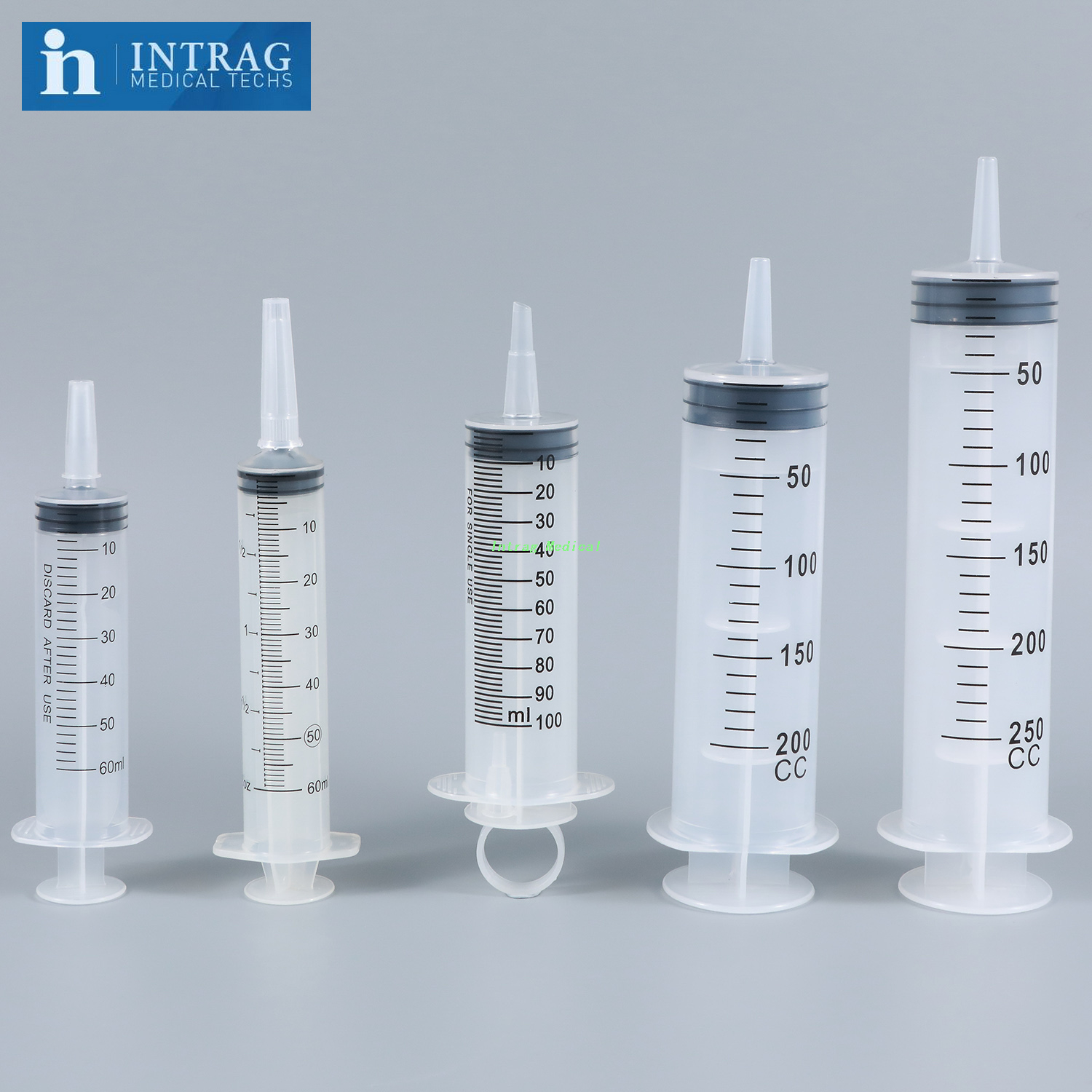
Effective wound management relies on a precise mechanical balance. You must deliver enough fluid pressure to clear debris and bacterial load without driving contaminants deeper or causing micro-trauma to the tissue bed. Standardizing wound care protocols across diverse care settings—from the Operating Room and Emergency Department to routine bedside dressing changes—requires selecting the correct delivery mechanism. Using the wrong tip design compromises the targeted 8–15 PSI pressure threshold, increases the risk of biohazard splashback, and leads to inconsistent clinical outcomes. This guide breaks down the fluid dynamics of various tip designs, comparing structural features, pressure outputs, and safety mechanisms to help clinical procurement teams evaluate and select the right irrigation syringe for their specific facility requirements.
Pressure Control is Tip-Dependent: Achieving the clinically recommended 8–15 PSI requires specific combinations of barrel volume (typically a 35mL piston syringe) and tip aperture (such as an 18-gauge or 19-gauge equivalent).
Design Dictates Application: Catheter tips excel in high-volume, low-pressure flushing, while specialized angiocath or shielded tips are required for targeted, high-pressure debridement.
Safety Mechanisms are Non-Negotiable: Modern tip designs must account for splashback prevention to protect healthcare workers from bloodborne pathogens during high-pressure procedures.
Tool Specificity Matters: Standard injection products or an oral medication syringe cannot safely or effectively replicate the fluid dynamics of a purpose-built wound irrigation device.
The Mechanics of Wound Cleansing: Why Irrigation Syringe Tip Design Matters
Defining the Success Criteria for Wound Irrigation
Wound irrigation serves a direct mechanical function in tissue repair and infection control. The primary goal involves pairing the right physical pressure with non-toxic irrigants. Normal saline remains the standard choice for this application across most clinical environments. Proper irrigation effectively lifts and removes exudate, slough, and foreign bodies. It achieves this while carefully preserving healthy granulating tissue. If the pressure is too low, biofilms and necrotic debris remain anchored to the wound bed. This delays healing and invites localized infection. If the pressure is too high, the fluid stream drives surface bacteria deeper into vulnerable fascial layers. Successful cleansing requires a precise, controlled stream of fluid. The physical architecture of the syringe tip directly dictates this control. Clinicians rely on specific tip designs to manipulate fluid dynamics safely and predictably.
The healing cascade depends heavily on the initial preparation of the wound bed. During the inflammatory phase, the body naturally attempts to flush out contaminants. Mechanical irrigation assists this biological process. By applying a targeted stream of saline, you physically disrupt the adhesive bonds holding particulate matter to the tissue. This mechanical disruption is far more effective than simply pouring fluid over the site. However, the margin for error is narrow. New capillary loops forming in the wound bed are highly fragile. A poorly designed tip that delivers a concentrated, high-velocity jet will shear these capillaries, causing bleeding and setting the healing process back by days.
Fluid Dynamics and PSI Requirements
Understanding fluid dynamics is essential for safe wound care. There is a strict inverse relationship between syringe barrel size, tip diameter, and fluid pressure. A smaller syringe barrel generates higher pressure when force is applied to the plunger. Conversely, a larger barrel disperses that hand force over a wider internal surface area, resulting in lower exit pressure. The clinical standard for safe bacterial reduction sits firmly between 8 and 15 PSI. Pressures below 8 PSI fail to overcome the adhesive forces of wound debris. Pressures exceeding 15 PSI cause cellular damage and push contaminants into deeper tissue planes.
Achieving this exact 8–15 PSI range requires a specific structural pairing. Clinical guidelines consistently recommend a 35mL syringe paired with an 18-gauge or 19-gauge tip equivalent. This combination perfectly balances average human hand force with fluid resistance to hit the target pressure. If a nurse uses a 10mL syringe with the same tip, the pressure can easily spike above 30 PSI. If they use a 60mL syringe, the pressure drops below 5 PSI, rendering the irrigation ineffective. The physical dimensions of the equipment dictate the therapeutic outcome.
Estimated Pressure Outputs Based on Syringe Barrel Volume
Syringe Barrel Size
Standard Tip Gauge
Estimated Output Pressure (PSI)
Clinical Safety Rating
3 mL
19-gauge
25 - 40 PSI
Unsafe (Causes tissue trauma)
10 mL
19-gauge
20 - 30 PSI
Unsafe (Drives bacteria deeper)
35 mL
19-gauge
8 - 15 PSI
Optimal (Safe debridement)
60 mL
19-gauge
2 - 6 PSI
Ineffective (Fails to lift debris)
The Role of the Piston and Plunger Rod
Pressure generation is not solely about the tip aperture. The internal mechanics of the syringe play a massive role in fluid delivery. A well-designed piston syringe and plunger rod ensure smooth aspiration and controlled delivery of fluids. The rubber or synthetic silicone gasket on the piston must maintain a flawless seal against the inner barrel wall. If the seal is poor, fluid leaks backward past the plunger during depression, dropping the delivery pressure at the nozzle.
Furthermore, if the piston lacks proper lubrication, the plunger will stutter as it moves down the barrel. This stuttering creates dangerous, unpredictable pressure spikes. Sudden bursts of high-pressure fluid can severely damage delicate newly formed tissue. High-quality manufacturing ensures smooth, continuous travel of the plunger rod. This steady movement translates into a consistent, safe stream of irrigant hitting the wound bed. Clinicians rely on tactile feedback from the plunger to gauge how much force they are applying. A sticky or rigid plunger destroys this feedback loop, leading to poor technique and suboptimal patient outcomes.
Evaluating Primary Tip Designs for an Irrigation Syringe
Catheter Tip Syringes
Catheter tip syringes feature a distinct structural profile. They possess a wider, elongated, and tapered opening compared to standard medical syringes. This tapered design allows for a secure friction fit with various medical tubes, such as Foley catheters or gastrostomy tubes. The wider aperture significantly alters the fluid dynamics of the device. It permits a high volume of fluid to exit the barrel rapidly. However, this wide opening prevents the buildup of internal pressure, regardless of how hard the user presses the plunger.
This design is highly preferred for specific clinical applications. It excels in gentle wound irrigation where tissue is extremely fragile. Clinicians use catheter tips extensively for ostomy care, flushing feeding tubes, and clearing urinary catheters. They are also ideal for irrigating larger cavity wounds or deep tunneling wounds. In these scenarios, high volume and low pressure allow solutions to flow freely into and out of the cavity without causing trauma or forcing fluid into closed spaces.
Despite their utility, catheter tips have strict limitations in acute wound care. They cannot generate the high PSI needed for heavily contaminated wounds. They are entirely ineffective for traumatic wound debridement. Using a catheter tip on thick slough, road rash, or stubborn biofilms will not yield clinical success. The fluid simply washes over the debris without dislodging it. Procurement teams must ensure staff understand that catheter tips are for flushing, not for pressurized cleansing.
Luer Lock with Angiocath/Needle Attachments
The Luer lock system provides a secure, threaded connection between the syringe barrel and the tip. For wound care, clinicians often pair a 35mL Luer lock syringe with an 18-gauge or 19-gauge soft catheter tip (often an IV angiocath with the sharp introducer needle removed). This structural combination is highly intentional. The threaded lock ensures the tip will not detach under high pressure. The narrow gauge of the attached catheter restricts fluid flow just enough to build the necessary internal pressure.
This configuration stands as the gold standard for pressurized irrigation. It reliably achieves the precise 8–15 PSI required for traumatic wound debridement. The focused stream effectively lifts stubborn debris, particulate matter, and heavy bacterial loads. Emergency departments rely heavily on this setup for initial wound management of lacerations and abrasions. The soft, flexible nature of the angiocath tip also allows clinicians to navigate complex wound geometries safely.
Safety considerations remain paramount with this design. Clinicians must strictly use blunt or soft-tipped attachments. Standard sharp hypodermic needles should never be used for irrigation under any circumstances. Sharp needles pose a severe risk of accidental needle-stick injuries to staff, especially when working with wet, slippery gloves. They also risk accidental tissue puncture, which introduces new trauma to the wound bed and creates a pathway for deeper infection.
Key Evaluation Dimensions for Procurement and Clinical Use
Shielded and Funnel-Shaped Tips
Shielded tips represent a significant advancement in irrigation safety and fluid control. These designs feature integrated or attachable funnel-shaped shields. The shield surrounds the central irrigation nozzle. Often, the outer edge of the funnel is cut at a 45-degree angle. This structural feature serves a highly specific dual function during clinical procedures, addressing both patient efficacy and staff safety.
First, the shield helps maintain an optimal distance from the wound bed. Pressing the angled shield gently against the intact skin surrounding the wound regulates the standoff distance of the nozzle. This consistent distance ensures the fluid pressure remains within the therapeutic 8–15 PSI range upon impact. If a clinician holds a standard tip too close, the impact pressure increases; if held too far, it decreases. The shield eliminates this variable.
Second, the funnel acts as a physical barrier against effluent splashback. As pressurized fluid hits the wound, it rebounds. The shield catches this contaminated fluid, directing it downward and protecting the user. Historically, clinicians created ad-hoc solutions for splashback. A common practice involved cutting an IV saline bottle in half to form a makeshift shield. This practice carries significant risks. Cut plastic leaves sharp, jagged edges that can lacerate the patient. Furthermore, makeshift shields are not sterile. Procuring standardized, commercially available shielded syringes eliminates these risks entirely.
Differentiating from Non-Irrigation Syringes
Facility procurement must carefully distinguish between purpose-built devices and general medical supplies. An oral medication syringe is entirely inappropriate for wound care. These devices feature structural differences tailored specifically for enteral feeding or oral dosing. They often have off-center (eccentric) tips designed to direct fluid against the inside of the cheek to prevent choking. Their volume-to-pressure ratios are completely incompatible with the 8–15 PSI requirement. Attempting to use them for wound cleansing is both ineffective and potentially unsafe, as they cannot generate a focused, pressurized stream.
Similarly, standard injection products fail to meet irrigation standards. Hypodermic syringes are designed for tissue penetration and low-volume drug delivery. Their barrels are typically too small, often ranging from 1mL to 10mL. Using a small barrel with a narrow needle generates pressures well above 15 PSI. This causes severe tissue trauma. Their tip designs, overall mechanics, and lack of splashback protection make them fundamentally unsuitable for surface irrigation.
Clinical Application Matrix for Syringe Tip Designs
Tip Design
Optimal PSI Range
Primary Clinical Application
Key Limitation
Catheter Tip
Low (Under 5 PSI)
Gentle flushing, ostomy care, large cavities
Cannot dislodge stubborn debris or biofilms
Luer Lock + Angiocath
Targeted (8-15 PSI)
Traumatic wound debridement, heavy contamination
Requires secure attachment to prevent blowout
Shielded / Funnel Tip
Targeted (8-15 PSI)
High-pressure cleansing with splashback risk
Requires proper angle technique for effectiveness
Oral Medication Tip
Variable / Uncontrolled
Enteral feeding, oral liquid dosing
Structurally incompatible with wound care
Standard Injection Tip
High (Over 15 PSI)
Subcutaneous or intramuscular drug delivery
Causes tissue trauma if used for irrigation
Features-to-Outcomes Mapping
Evaluating an irrigation device requires mapping its physical features directly to clinical outcomes. Volume capacity versus pressure output is the primary metric. Clinical consensus firmly establishes the 35mL syringe size as the optimal baseline. This specific volume balances hand ergonomics with necessary pressure generation. A smaller syringe requires too much thumb force to maintain steady pressure over a long duration. A larger syringe, such as a 60mL barrel, makes it difficult to generate enough pressure without severe hand fatigue. The 35mL size allows a clinician to comfortably deliver the 8–15 PSI standard across multiple dressing changes.
Aspiration and delivery control also dictate clinical success. The internal plunger mechanics must be flawless. Procurement teams must assess the quality of the plunger gasket. Silicone-lubricated or specialized synthetic rubber gaskets are essential. They prevent stuttering during fluid delivery. A smooth glide ensures the fluid hits the wound at a constant velocity. Jerky plunger movements cause pressure spikes that disrupt the healing tissue bed. When evaluating samples, clinical staff should test the plunger action both dry and wet to ensure consistent resistance.
Scalability and Standardization
Standardizing wound care supplies improves patient safety and operational efficiency. The necessity of single-use, sterile packaging cannot be overstated. A high-quality disposable syringe eliminates cross-contamination risks across different hospital wards. Reusing irrigation tools, even on the same patient during a single shift, invites bacterial colonization and biofilm formation on the plastic surfaces. Facilities must evaluate the operational impact of their stocking strategies. Stocking pre-assembled irrigation kits saves nursing time during critical procedures. However, stocking individual components offers more flexibility for unique wound presentations.
Inventory consolidation is a major goal for procurement teams. Selecting a versatile tip design streamlines supply chains. A universal Luer lock barrel with interchangeable tips is highly efficient. This system allows the same base syringe to be used across the ED, OR, and general medical-surgical floors. Staff simply attach a catheter tip for gentle flushing or a shielded tip for pressurized debridement. This reduces the need to stock multiple highly specialized units, saving shelf space and simplifying the ordering process.
Implementation Risks and Mitigation in Wound Irrigation
Risk: Biohazard Splashback and Staff Exposure
High-pressure irrigation inherently creates aerosolized biohazards. When pressurized fluid strikes a contaminated wound, it splatters. This direct fluid splash endangers staff during bedside or surgical debridement. The effluent contains bloodborne pathogens, bacteria, and necrotic tissue. Aerosolization allows these microscopic contaminants to linger in the air. This poses a severe inhalation and contact risk to unprotected healthcare workers, particularly when dealing with MRSA or other multi-drug resistant organisms.
Mitigating this risk requires structural and procedural interventions. Facilities must mandate the use of shielded tip designs for all high-pressure applications. The physical barrier of a funnel tip drastically reduces fluid rebound and traps aerosolized particles before they disperse. Additionally, clinical directors must enforce strict Personal Protective Equipment protocols. Gowns, gloves, and full face shields are mandatory when performing pressurized wound cleansing, regardless of the tip design used.
Steps for Safe High-Pressure Irrigation
Don appropriate PPE, including a full face shield and fluid-resistant gown.
Position a sterile basin beneath the wound to catch runoff effluent.
Attach a shielded tip securely to a 35mL Luer lock syringe.
Draw up room-temperature normal saline.
Place the angled shield gently against the intact skin to establish the correct standoff distance.
Depress the plunger with smooth, continuous force to maintain 8-15 PSI.
Risk: Tissue Trauma from Over-Pressurization
Over-pressurization is a silent but destructive clinical error. Using too narrow a tip with a small barrel syringe easily exceeds 15 PSI. This excessive force drives surface bacteria deeper into the wound bed, potentially causing deep tissue infections or osteomyelitis. It also damages delicate new cellular growth, such as granulation tissue and epithelial cells. This trauma delays healing, increases patient pain, and extends hospital stays.
Mitigation relies entirely on standardized procurement and staff education. Facilities must structurally prevent dangerous pressure spikes. By standardizing procurement to 35mL barrels paired with 18/19-gauge equivalent tips, the risk is minimized. This specific hardware combination physically limits the maximum pressure a human hand can generate. It ensures the therapy remains within the safe, therapeutic window. Staff must also be trained to recognize the signs of tissue trauma, such as pinpoint bleeding during irrigation.
Risk: Supply Chain and Material Failure
Material failure during a procedure compromises patient safety and wastes valuable time. Poorly manufactured syringes may suffer from plunger blowout under pressure, spilling saline and breaking the sterile field. The tip may also detach violently if the locking mechanism fails. These failures interrupt the cleansing process, startle the patient, and can lead to accidental contamination of the wound site.
Mitigation requires rigorous vendor evaluation. Procurement teams must assess manufacturers based on ISO compliance and material durability. Secure tip-locking mechanisms are non-negotiable. Threaded Luer locks must be chosen over standard slip tips for any high-pressure use. A threaded lock physically prevents the tip from blowing off when the plunger is forcefully depressed. Facilities should request material specification sheets to verify the tensile strength of the plastics used in the syringe barrel and tip attachments.
Checklist for Evaluating Syringe Quality
Verify ISO 80369-7 compliance for Luer connectors.
Test plunger action for smooth, stutter-free movement.
Inspect the gasket seal for fluid leakage under maximum thumb pressure.
Ensure the barrel markings are clear, indelible, and easy to read.
Confirm the packaging maintains a sterile barrier and opens without tearing the inner wrapper.
Conclusion
Audit your current inventory to identify and remove makeshift shields, replacing them with commercially standardized shielded tips.
Standardize your facility's procurement around the 35mL piston syringe paired with 19-gauge equivalents for all pressurized debridement protocols.
Conduct hands-on clinical trials with nursing staff to evaluate plunger smoothness and ergonomic comfort before finalizing bulk orders.
Implement mandatory staff training on the inverse relationship between barrel size and fluid pressure to prevent accidental tissue trauma.
FAQ
Q: What is the ideal PSI for wound irrigation?
A: The clinical standard for wound irrigation is between 8 and 15 PSI. This specific pressure range provides enough mechanical force to lift debris, slough, and surface bacteria. It achieves this without causing micro-trauma to fragile granulating tissue or driving contaminants deeper into the wound bed.
Q: Why use a catheter tip irrigation syringe instead of a standard Luer lock?
A: Catheter tips feature a wider, tapered opening that allows for high-volume, low-pressure fluid flow. This design is ideal for gentle flushing of delicate tissues, ostomy care, or clearing large cavity wounds where high pressure is unnecessary and potentially harmful.
Q: Can you use an oral medication syringe for wound irrigation?
A: No. Oral syringes have off-center tips and volume-to-pressure ratios designed for swallowing, not pressurized cleansing. Their structural mechanics make them incapable of safely delivering the required 8–15 PSI, rendering them ineffective and unsafe for wound care.
Q: What is the standard syringe size for wound irrigation?
A: The 35mL piston syringe is the clinical standard. When paired with an 18-gauge or 19-gauge tip, the 35mL barrel perfectly balances hand ergonomics with fluid dynamics to consistently generate the safe 8–15 PSI required for effective debridement.
Q: How do shielded irrigation tips improve clinical safety?
A: Shielded tips feature a 45-degree funnel that surrounds the irrigation nozzle. This physical barrier catches rebounding fluid, preventing biohazard splashback and the aerosolization of bloodborne pathogens, thereby protecting healthcare staff during high-pressure procedures.
Q: Are standard injection products suitable for wound irrigation?
A: No. Standard injection products utilize sharp needles designed for tissue penetration and small barrels designed for low-volume delivery. Using them for irrigation generates excessive pressure, causing severe tissue trauma and increasing the risk of accidental needle-stick injuries.
Providing "High Quality Products, Excellent Service, Competitive Prices and Prompt Delivery", we are now looking forward to have greater and further cooperation with customers all over the world, based on mutual benefits.