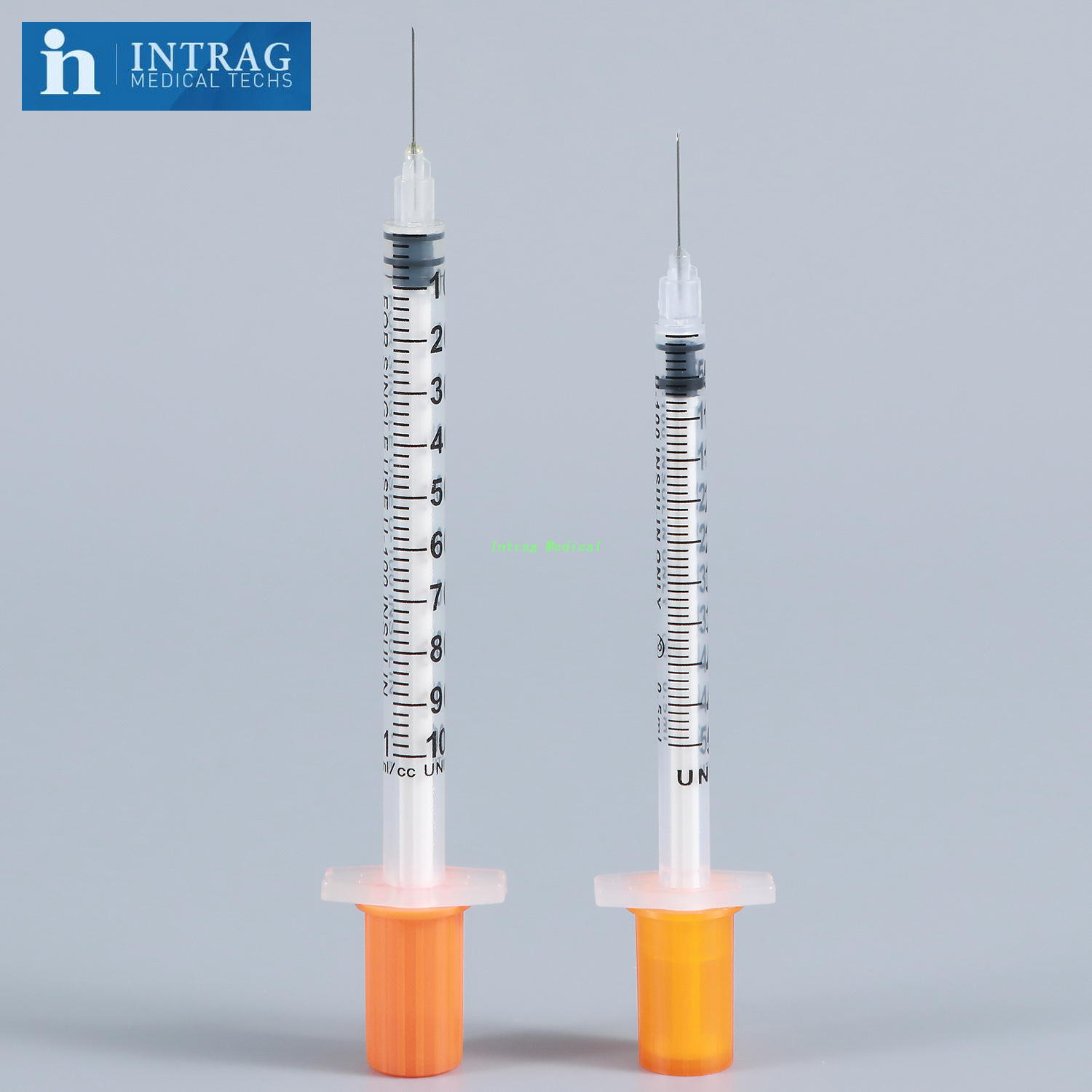
In high-frequency injection therapies, the microscopic volume of fluid left inside a syringe hub after the plunger is fully depressed represents a compounding clinical and economic liability. Standard syringes with detachable needles retain residual medication, leading to volumetric waste, compounding micro-dosing inaccuracies, and increased risks of contamination. For high-cost biologics and precise insulin regimens, these margins of error are unacceptable. Evaluating the structural dead space of an injection device is a mandatory step for healthcare procurement and clinical adherence. This guide breaks down the mechanics of low dead space (LDS) designs, their impact on dosage accuracy, and how to evaluate an Insulin Syringe for optimal clinical and economic outcomes.
Key Takeaways
Volumetric Efficiency: Low dead space designs minimize residual fluid, directly reducing the waste of high-cost medications and maximizing the number of extractable doses per vial.
Dosing Precision: Eliminating hub voids ensures that the exact measured unit volume is delivered to the patient, preventing compounding under-dosing in strict glycemic control protocols.
Contamination Mitigation: Reduced residual fluid significantly lowers the risk of bacterial growth and cross-contamination, a critical factor in both clinical settings and public health harm reduction.
Procurement Standardization: Transitioning to integrated-needle LDS syringes requires evaluating hub geometry, ISO compliance, user preference benchmarks, and compatibility with complementary tools like the insulin pen needle and safety lancet.
Understanding Dead Space in Injection Devices
Defining Dead Space
Dead space refers to the internal void volume within an injection device. It is the physical gap between the syringe plunger, the hub, and the needle tip. When you fully depress the plunger, fluid remains trapped in this void. Capillary action and surface tension keep the medication locked inside the hub. This trapped fluid never reaches the patient. You must account for every microliter of medication drawn from a vial. Ignoring dead space compromises both dosing accuracy and inventory efficiency. In standard clinical practice, we measure this void in microliters. A standard device might hold up to 100 microliters of wasted fluid per use. Over a single shift in a busy ward, this microscopic retention scales into visible medication loss.
The physics of fluid retention dictate that higher viscosity medications cling more aggressively to the internal walls of the hub. When drawing up suspensions or concentrated biologics, the surface tension increases the retained volume. You cannot simply push harder on the plunger to clear it. The mechanical stop of the plunger against the barrel dictates the absolute limit of fluid expulsion. Any space remaining beyond that mechanical stop is dead space.
High vs. Low Dead Space Mechanics
Standard or High Dead Space (HDS) devices typically feature detachable needles. These include Luer slip or Luer lock mechanisms. The connection point creates a significant internal cavity. Fluid becomes trapped in the needle hub and the syringe tip. This design inherently wastes medication with every use. The Luer lock mechanism requires a threaded connection, which adds even more internal surface area for fluid to pool.
Low Dead Space (LDS) devices eliminate this cavity through specific engineering choices. They feature an integrated or fixed needle. Alternatively, they use an extended plunger tip that physically occupies the hub space. This mechanical design pushes maximum fluid through the cannula. The plunger sits flush against the base of the needle. This leaves virtually no room for residual medication to pool.
To understand the mechanical differences, consider these structural variations:
Integrated Cannula: The metal needle is glued or molded directly into the plastic barrel, removing the secondary hub attachment entirely.
Extended Plunger Tip: A specialized rubber gasket features a conical spike that drives into the neck of the syringe, displacing fluid that would otherwise sit in the tip.
Reduced Internal Diameter: The neck of the syringe is narrowed to match the exact gauge of the needle, minimizing the transition zone where fluid velocity drops and pooling occurs.
Historical Context & Baseline Standards
The modern insulin syringe pioneered LDS technology. Early diabetes management required precise measuring and mixing of short-acting and long-acting insulins. Standard syringes caused unpredictable dosing variations due to hub retention. Manufacturers developed the fixed-needle design specifically to solve this problem. This innovation established the baseline standard for micro-dosing accuracy. Today, LDS technology extends beyond diabetes care. It is a mandatory requirement for administering vaccines, biologics, and highly concentrated medications.
During the early days of insulin therapy, patients used glass syringes with detachable steel needles. They had to boil these components to sterilize them. The dead space in these early models was massive. Patients frequently experienced hypoglycemic or hyperglycemic episodes because the retained volume varied wildly depending on how tightly they attached the needle. The shift to disposable, fixed-needle plastics revolutionized glycemic control. It standardized the delivered dose, allowing endocrinologists to prescribe exact unit measurements with confidence.
Why Low Dead Space is Non-Negotiable for an Insulin Syringe
Precision Dosing and Glycemic Control
The clinical risk of micro-under-dosing is severe. A standard syringe can retain 0.05mL to 0.1mL of fluid per injection. In a U-100 insulin regimen, 0.05mL equals five units of insulin. For patients on strict, low-unit protocols, missing five units alters glycemic control drastically. This deficit leads to unexplained hyperglycemia. It complicates patient monitoring and treatment adjustments. When a patient requires exactly 12 units, delivering only 7 units due to hub retention causes immediate clinical failure.
Mixing insulins amplifies this risk. Patients often draw fast-acting insulin followed by intermediate-acting insulin into the same barrel. If the hub retains fast-acting insulin, it alters the intended ratio. The trapped fluid mixes unpredictably with the second medication. Low dead space designs prevent this residual pooling. They ensure the exact measured unit volume enters the patient. When drawing clear regular insulin before cloudy NPH insulin, any clear insulin trapped in a high dead space hub gets pushed into the cloudy vial during the second draw, contaminating the entire multi-dose vial.
The Economics of Medication Waste
Residual waste carries a massive financial burden. You must calculate the cumulative cost of this waste over time. High-cost insulins and GLP-1 receptor agonists are expensive. Losing 0.1mL per injection across thousands of doses drains operational budgets. Over a 12-month period, this volumetric waste equates to hundreds of lost vials. Procurement departments often overlook this hidden cost when selecting cheaper, high dead space alternatives.
Vial extraction efficiency relies entirely on syringe design. LDS designs enable the extraction of up to 10-15% more usable doses per multi-dose vial. You maximize the yield of every purchased medication unit. Real-world validation occurred during global COVID-19 vaccination efforts. Clinics used the standard fixed-needle design to extract maximum doses. They successfully pulled up to seven doses per vial. This proved the unmatched volumetric efficiency of LDS technology for high-value medications.
Medication Waste Calculation per 10mL Vial
Syringe Type
Dead Space Volume
Wasted Volume per 100 Draws
Lost Doses (Assuming 0.5mL Dose)
Standard Luer Lock
0.084 mL
8.4 mL
~16 Doses
Standard Luer Slip
0.045 mL
4.5 mL
9 Doses
LDS Fixed Needle
0.003 mL
0.3 mL
0 Doses
Mitigating Cross-Contamination and Infection Risks
Residual blood and fluid volume directly correlate with pathogen survival rates. Bloodborne pathogens like HIV and Hepatitis C thrive in trapped fluids. Standard syringes provide a larger reservoir for these pathogens to survive. Minimizing trapped fluid reduces the opportunity for environmental contaminants to mix with residual medication. The larger the void, the more coagulated blood and tissue fluid can retract into the hub upon needle withdrawal.
Clinical safety protocols demand strict infection control. LDS designs are heavily favored in public health programs. End-users prefer them for harm reduction. In scenarios involving accidental needle sticks, a lower residual volume means a lower viral load exposure. If unauthorized re-use occurs, the reduced dead space significantly limits the transmission risk. Procurement teams must prioritize these safety metrics when outfitting community health centers or mobile clinics.
Comparing Delivery Systems: Syringes vs. Alternatives
Traditional Fixed-Needle Syringes vs. Detachable Needle Syringes
Choosing between delivery systems involves trade-offs in flexibility versus efficiency. Detachable needles offer versatility. A Luer lock is necessary when drawing highly viscous medications or changing needle gauges between drawing and injecting. You might use a heavy 18G needle to draw a thick suspension from a vial, then swap to a 25G needle for the intramuscular injection. However, this flexibility sacrifices volumetric efficiency. When administering precise micro-doses, a fixed-needle LDS device is mandatory. The structural integration guarantees that the measured dose matches the delivered dose. You eliminate the mechanical void entirely.
In acute care settings, nurses frequently encounter situations where they must choose the right tool. Using a Luer lock for a 1mL subcutaneous injection of a highly concentrated biologic is a procedural error. The dead space will trap up to 10% of the intended dose. Fixed-needle devices remove this variable, ensuring the patient receives the exact prescribed volume.
The Role of the Insulin Pen Needle in Minimizing Waste
Pre-filled pen systems dominate modern diabetes care. Evaluating the dead space in these systems is a different process. The internal mechanics of an insulin pen needle differ from traditional barrel syringes. The needle attaches directly to the medication cartridge via a threaded plastic hub. The dead space exists only within the short cannula and the immediate attachment point. Because the medication is pre-filled and driven by a mechanical dial, the volumetric waste is isolated to the needle itself.
Compared to traditional syringes, pen needles offer exceptional dose delivery accuracy. However, they require strict priming protocols. Users must perform a safety shot to clear air from the needle. This priming step intentionally expels a small amount of medication. While the structural dead space is low, the operational priming waste must be factored into overall efficiency calculations. You must train patients to dial two units and discharge them into the air before every single injection to ensure the cannula is fully primed and free of air locks.
Holistic procurement requires aligning injection devices with reliable diagnostic equipment. You cannot separate medication delivery from blood glucose testing. Integrating complementary tools ensures a seamless patient experience. Selecting the right diagnostic tools supports the overall injection ecosystem. A patient cannot accurately dose their insulin if their blood glucose reading is compromised by poor sampling techniques.
Evaluate the safety lancet for patient comfort and infection control. These devices feature retractable needles that prevent accidental sticks. They ensure consistent blood volume yields for accurate glucose readings. The spring-loaded mechanism guarantees a precise puncture depth, reducing tissue trauma. For standard clinical settings, a traditional blood lancet provides reliable capillary sampling. Aligning these tools with LDS syringes creates a standardized, safe, and efficient care protocol. When procurement standardizes all these components, staff spend less time troubleshooting incompatible devices and more time on direct patient care.
Device Mechanics Comparison
Feature
High Dead Space (HDS)
Low Dead Space (LDS)
Needle Attachment
Detachable (Luer Lock/Slip)
Integrated (Fixed) or Extended Plunger
Residual Volume
0.05mL - 0.1mL per use
Less than 35 microliters
Dosing Precision
Prone to micro-under-dosing
Highly accurate micro-dosing
Vial Extraction
Standard yield
10-15% higher yield per vial
Primary Use Case
Viscous fluids, deep intramuscular
Insulin, vaccines, high-cost biologics
Technical Evaluation Criteria for Procurement
Hub Geometry and Plunger Design
Assessing the physical design of the syringe is the first step in technical evaluation. Look closely at the plunger tip. Flat plungers leave a gap in the needle hub. Spiked or extended plungers are engineered to physically enter the hub cavity. They push the medication out completely, eliminating the void. When you inspect a sample, depress the plunger fully and hold it up to the light. You should see zero daylight between the rubber gasket and the base of the needle.
Evaluate the seal integrity of the rubber gasket. The gasket must maintain consistent pressure against the barrel walls. Poor seal integrity causes backflow or leakage under pressure. The material should be latex-free synthetic rubber to prevent allergic reactions. A tight, smooth-gliding seal ensures accurate drawing and precise delivery. If the plunger stutters or catches as you draw back, the silicone lubrication inside the barrel is inadequate. This stuttering makes it impossible to draw an exact micro-dose.
Needle Gauge, Length, and Cannula Quality
Balancing patient comfort with fluid dynamics requires careful selection of needle specifications. Ultra-fine gauges (such as 30G or 31G) reduce injection pain. However, you must consider the flow rate of different medication concentrations. U-100 flows differently than highly concentrated U-500. The internal diameter of the cannula must accommodate the fluid viscosity without requiring excessive thumb pressure. If the gauge is too small for a viscous biologic, the user will struggle to depress the plunger, potentially causing the needle to shift in the tissue.
Lubrication and bevel geometry define cannula quality. High-quality needles feature a multi-bevel tip. A 3-bevel or 5-bevel geometry parts the tissue rather than tearing it. Medical-grade silicone lubrication ensures smooth tissue penetration. This coating must be applied evenly without compromising the structural integrity of the fixed needle or clogging the narrow lumen. You can test this by performing a drag test on a synthetic skin block. A properly lubricated, multi-bevel needle will glide in with minimal resistance.
Regulatory Compliance, Benchmarking, and Manufacturing Standards
Strict regulatory compliance is non-negotiable. Verify that the devices meet ISO 8537 standards. This specific ISO standard governs sterile single-use syringes for insulin. It dictates the maximum allowable dead space, scale accuracy, and structural durability. Devices lacking this certification pose severe clinical risks. You cannot rely on manufacturer marketing materials alone; you must request the actual compliance certificates.
Benchmark potential suppliers against industry leaders. Evaluate user preference data and clinical reliability reports. Scrutinize the exact microliter retention thresholds published by the manufacturer. Audit these claims rigorously. Request independent laboratory testing data to ensure the dead space volume complies strictly with your procurement requirements. If a vendor claims a dead space of less than 35 microliters, demand the batch testing reports that prove this metric across multiple production runs. Testing facilities typically use water displacement methods to verify these exact microliter measurements.
Implementation Realities and Adoption Risks
Training Staff and Patients on LDS Mechanics
Transitioning to new injection devices requires targeted education. Address the common air bubble perception immediately. LDS syringes often look different during the priming process. Because the hub space is eliminated, users may notice fewer visible air bubbles. Educate staff and patients on why this visual difference occurs. Reassure them that the device is functioning correctly. When a patient is used to flicking a standard syringe to dislodge a large bubble from the Luer hub, they might over-manipulate an LDS device, causing unnecessary needle contamination.
Standardize protocols for drawing up and mixing medications. Users must learn to draw medication without introducing air into the fixed hub. Techniques for tapping the barrel and expelling air differ slightly with extended plunger designs. Clear, hands-on training prevents user frustration and ensures dosing accuracy remains high. Implement a mandatory competency check for all nursing staff when switching from HDS to LDS inventory.
Follow these steps for standardizing the priming protocol:
Inject air equal to the desired dose into the vial to equalize pressure.
Invert the vial and draw slightly more than the required dose.
Tap the barrel gently to force any micro-bubbles to the top.
Depress the plunger to the exact unit line, expelling the bubbles and excess fluid back into the vial.
Withdraw the needle straight out to prevent bending the fine cannula.
Supply Chain Consistency and Vendor Selection
Risk mitigation in the supply chain is critical. Avoid counterfeit or non-compliant medical devices by auditing supplier certifications thoroughly. Verify CE marks, FDA clearances, and ISO 13485 quality management certifications. A break in supply chain integrity introduces massive clinical liability. Counterfeit devices often feature poor needle lubrication, inaccurate barrel markings, and high dead space disguised as LDS designs.
Assess vendor capacity comprehensively. A reliable vendor should supply the full diabetes care suite. This includes fixed-needle devices, pen needles, and capillary sampling tools. Consolidating your supply chain streamlines procurement. It ensures interoperability between devices and guarantees consistent quality across all patient care touchpoints. When you source your lancets, pen needles, and syringes from a single vetted manufacturer, you reduce administrative overhead and simplify inventory management. You also ensure that batch tracking is centralized in the event of a product recall.
Conclusion
Take the following actions to optimize your inventory and clinical protocols:
Conduct an internal audit of your current syringe inventory to calculate estimated volumetric waste and financial loss.
Request technical specification sheets from certified medical device manufacturers to verify ISO 8537 compliance.
Obtain physical samples of extended-plunger and fixed-needle designs to run comparative fluid extraction tests.
Update clinical training protocols to educate staff on the specific priming and drawing mechanics of low dead space devices.
FAQ
Q: What is considered a low dead space insulin syringe?
A: A low dead space syringe is designed with a fixed needle or an extended plunger tip. This design minimizes the void between the needle and the syringe barrel. It typically retains less than 35 microliters of fluid after the injection is complete, ensuring maximum medication delivery.
Q: How much medication is wasted in a high dead space syringe?
A: High dead space syringes with detachable needles can retain between 0.05mL and 0.1mL of fluid per use. Over multiple doses, this residual retention can result in the loss of one or more full doses per multi-dose vial, significantly increasing medication costs.
Q: Can you mix different insulins in a low dead space syringe?
A: Yes. Low dead space syringes were originally designed to facilitate the accurate measuring and mixing of different insulins. The design prevents residual fluid from one insulin type from being trapped in the hub, which would otherwise alter the intended dosage ratio.
Q: Are insulin pen needles considered low dead space?
A: Yes, modern pen needles are engineered to have minimal dead space. However, users must still follow proper priming protocols. Performing a safety shot is necessary to clear any air from the needle prior to injection, ensuring dose accuracy.
Q: How does dead space affect dosing accuracy?
A: If a syringe has high dead space, the volume of medication drawn into the hub is not delivered to the patient. For highly concentrated medications, a fraction of a milliliter equals several units. This retention leads to compounding under-dosing and poor treatment outcomes.
Q: What is the difference between an integrated needle and a detachable needle?
A: An integrated or fixed needle is permanently attached to the syringe barrel, eliminating the hub space where fluid gets trapped. A detachable needle, like a Luer lock, screws onto the syringe. This connection inherently creates a small internal void between the components.
Providing "High Quality Products, Excellent Service, Competitive Prices and Prompt Delivery", we are now looking forward to have greater and further cooperation with customers all over the world, based on mutual benefits.